I Qualified for the UNION ARENA Championship North America Finals
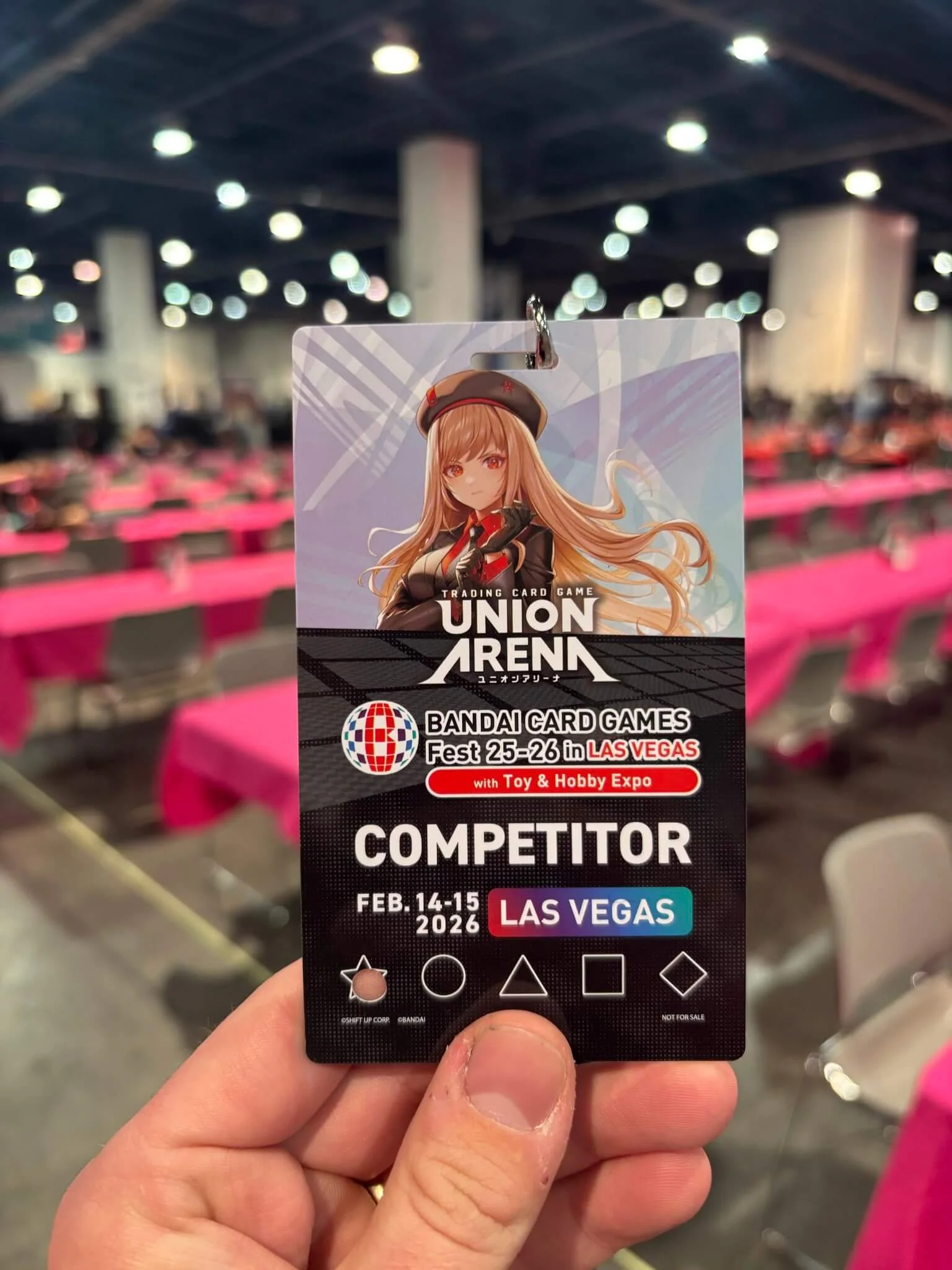
On Valentine’s Day Weekend, UNION ARENA players from all around North America (and even some from overseas) congregated in Las Vegas to battle it out for a chance to play in the first ever UNION ARENA Championship North America Finals taking place from February 14-15 2026 at the Las Vegas Convention Center.
Going into the event, the judges dropped a welcome surprise to players competing at the event: the top 32 players from the UNION ARENA Championship Last Chance Qualifier would progress to the Finals instead of only the top 16. At the UNION ARENA Regionals to date, it’s been only the top 16 who have been invited to the exclusive Final event – doubling that number sent an electric wave of excitement through tournament attendees who now saw their odds of playing through the weekend improve.
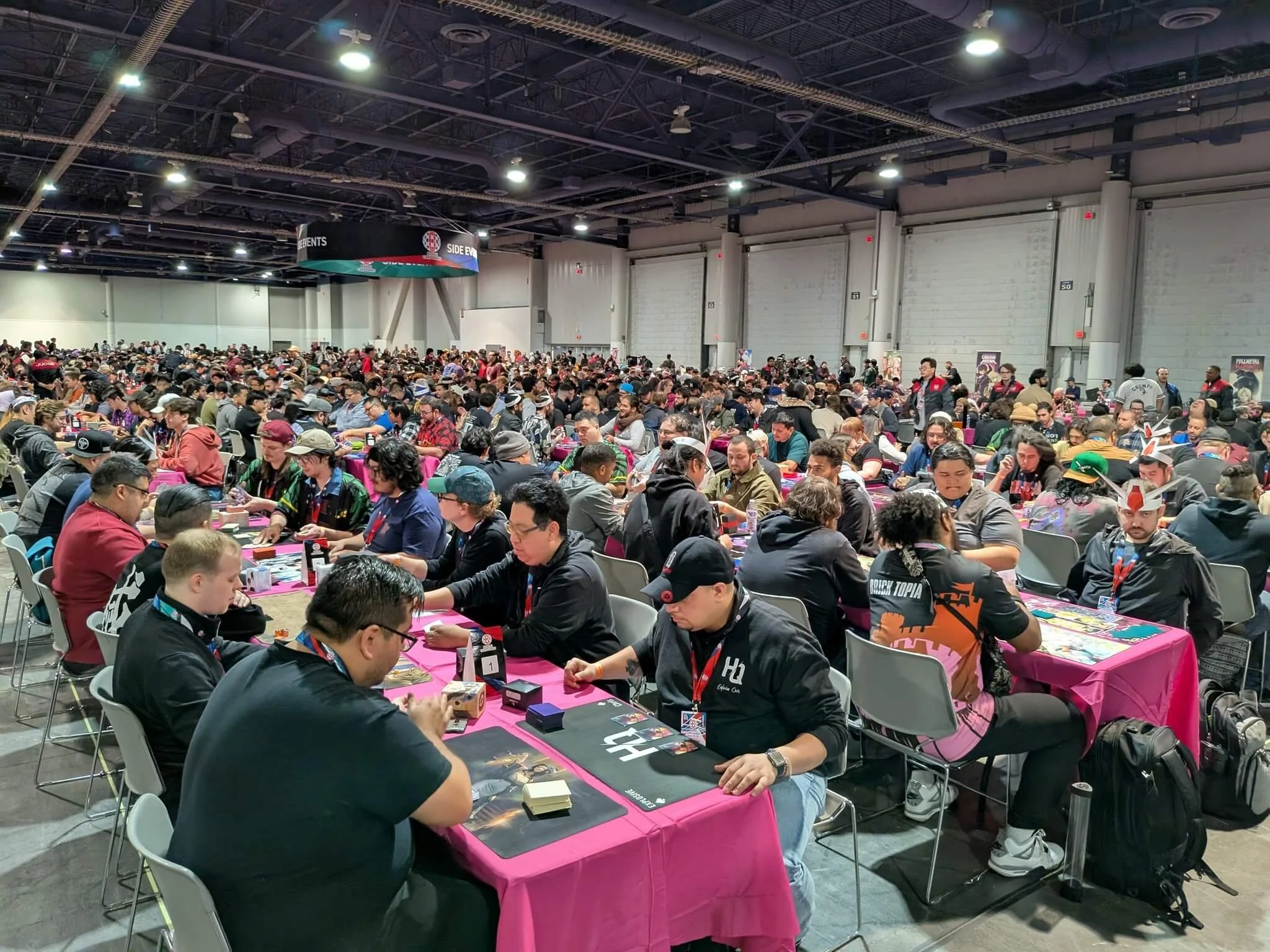
300 Players gather to compete for 32 spots in the invite-only UNION ARENA North America Championship Finals. Photo credits to Kozmic.
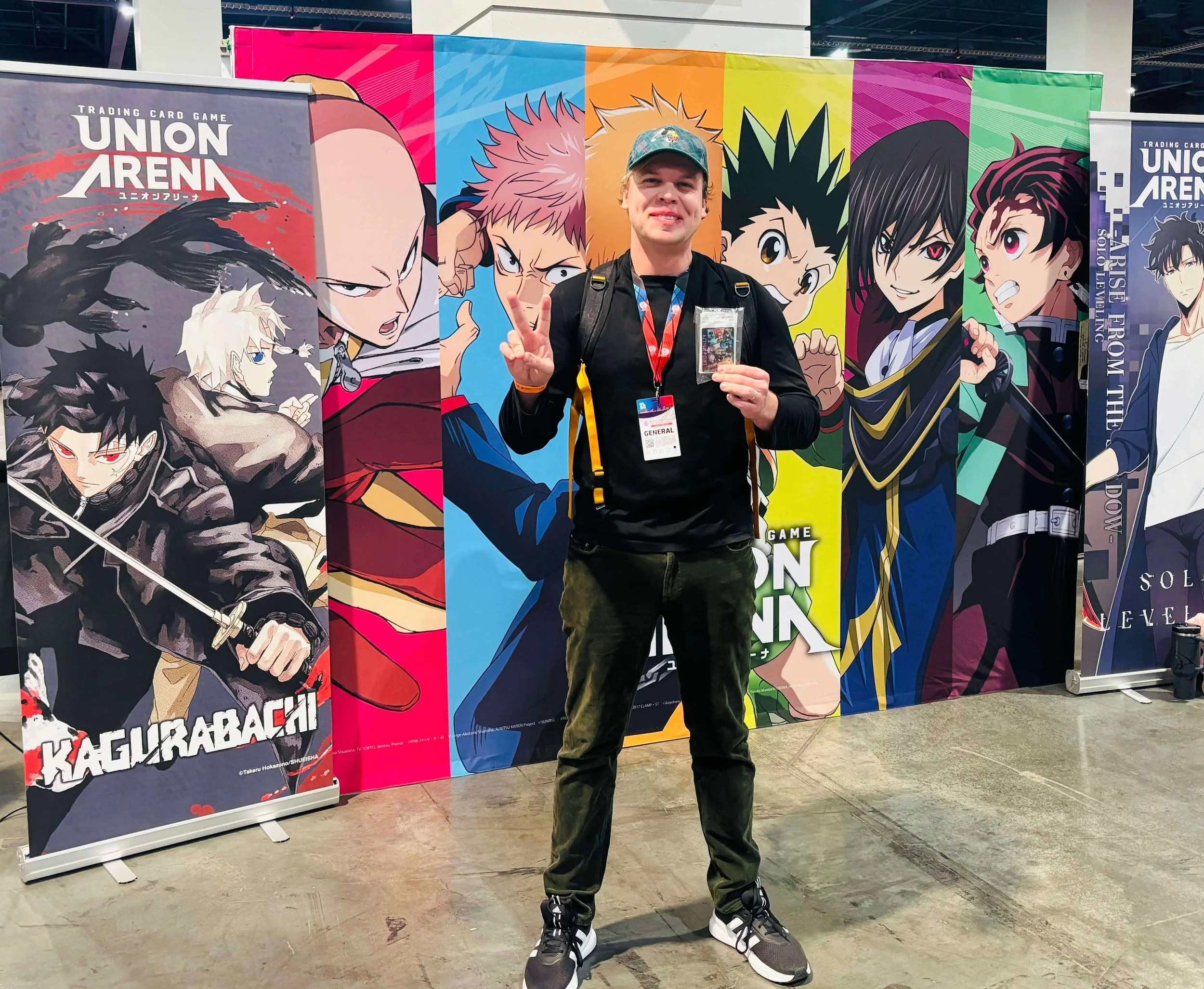
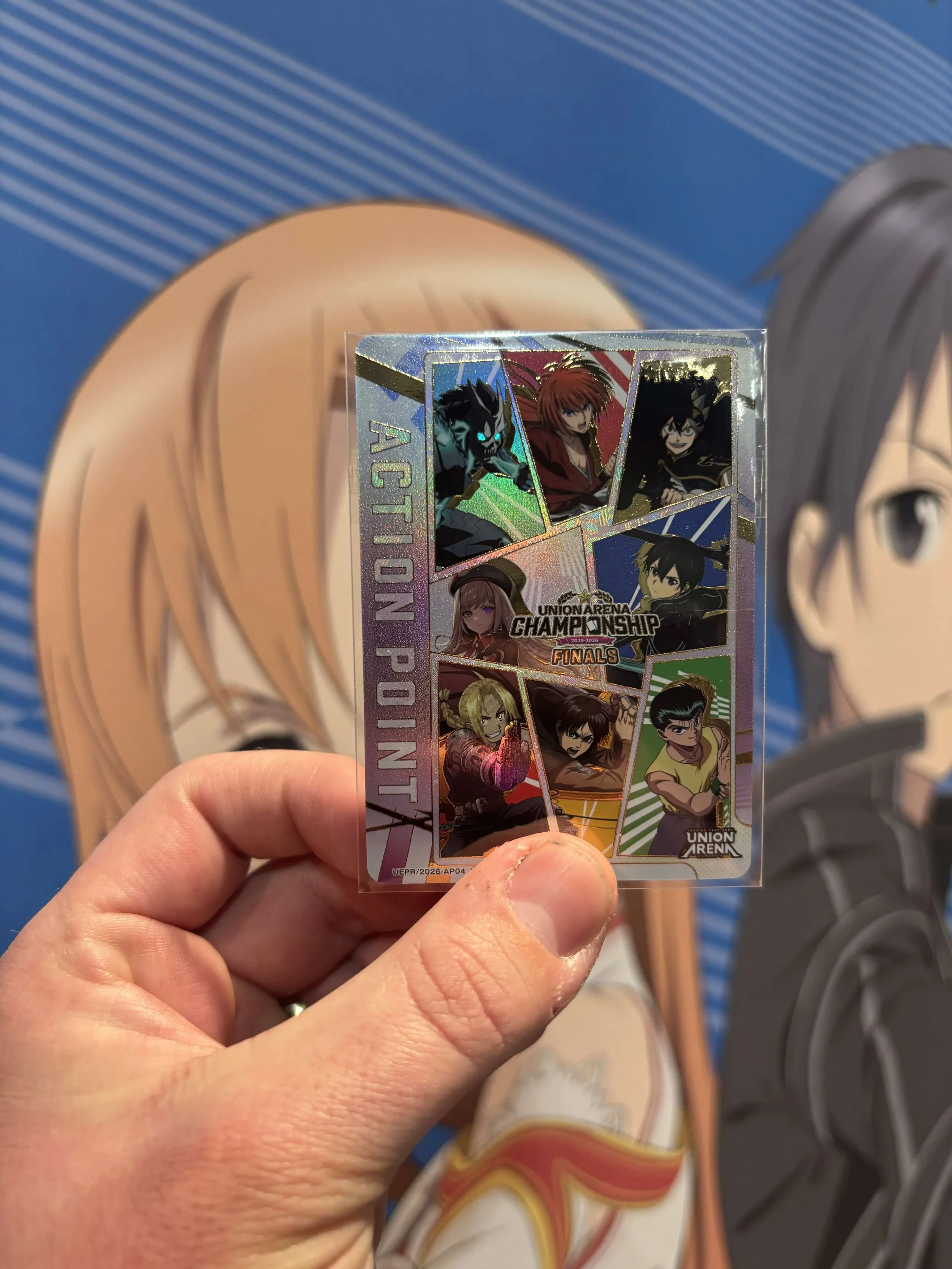
Still, 300 players were present at the tournament, and each one of those 300 hungry to get a piece of the top 32 and advance to the invite only Championship. In the end, I was one of those top 32, finishing the nine round tournament with a record of X/2, finishing in 23rd overall. Here’s the deck I played with, the preparation that went into the tournament, and the play-by-play from each match.
Preparing for the LCQ
Luckily for me, this wasn’t my first Rodeo. I played at the Los Angeles Regional where I piloted Goddesses to a decent finish. While I ultimately wasn’t satisfied with my X-3 run from that tournament, it was a valuable learning experience that helped me map a better path to success in this tournament.
What was one of my biggest takeaways that helped me prep for the LCQ? Don’t over prepare!
In fact, I had not played a single match (other than a few practice rounds against myself) of UNION ARENA in a whole week-and-a-half prior to the tournament. After topping the 30 player UNION ARENA case tournament the Wednesday the week before the LCQ, I felt very strongly about my Purple Progressive deck in the current meta. I opted to put my time and mind into other things and let UNION ARENA go on the back burner for almost a week rather than obsessively test every little thing up until the tournament.
That doesn’t mean I wasn’t prepared, however. I had already done significant testing into the potential meta, and played many tournaments with my deck beforehand. This gave me a huge leg up on the competition by the time I got to the LCQ. However, taking a whole week- and-a-half off of competing after all of my testing and improving was complete meant clearing my mind out to be rested and ready to tackle whatever the LCQ threw at me.
My LCQ Topping Purple Progressive deck
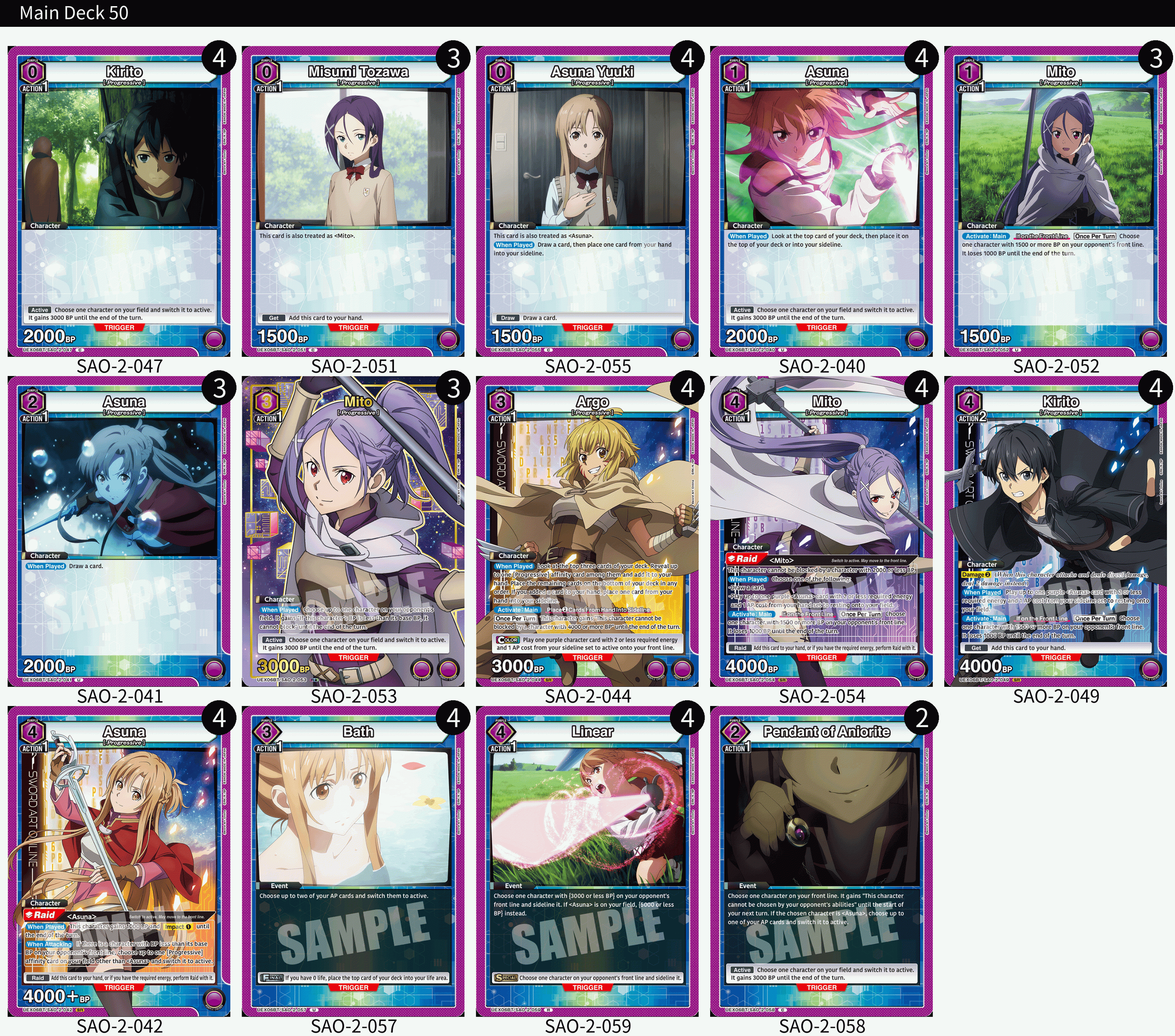
Essentially this is the same deck I’ve been playing and almost the same deck I topped the Evangelion Case Tournament with. The only difference is exchanging one Pendant for one Kirito. After reflecting on my battles with Purple Progressive, I’ve come to realize the the Pendant is a very nice-to-have card, while Kirito is a must-have. This fine-tuning done and I shipped Purple Progressive to the LCQ!
UNION ARENA Championships LCQ play-by-play
The LCQ was long. And every battle was super intense. The LCQ definitely had a more intense vibe to it than the LA Regional did – you really felt the intensity from players desiring so strongly to make the top cut. That being said, I started out the gate very strong, as you’ll see in a moment, before hitting a few stumbling blocks in the middle of the tournament and ultimately triumphing.
One helpful tip I will say is that – given how long the tournament was – it was super helpful to take a break from the tournament floor and find a nice quiet place to pop on the headphones and listen to some music. So if you find yourself getting a little overwhelmed at this sort of a big event, taking a quick break is always an option!
Round 1 versus Red Kenshin
Up first was a deck that by now I have plenty of practice against – Red Kenshin. Red Kenshin is as strong of a deck as ever, but its place in the meta is more as a counter to some of the more energy-hungry decks that are popular right now. Into Purple Progressive, its move to the energy line mechanic is of limited power.
As such, I was able to take many, many blocks and rebound the following turn, using a combination of well-timed specials and multi-attacks via Asuna and Kirito to close out the game.
Round 2 versus Yellow Evangelion
By now, I’ve played more than a few of these matchups. Yellow Evangelion is a massively popular deck right now. In this battle, I managed to maintain the upper-hand for the majority of the game. It was close as all of my battles from this tournament were, but I managed to squeak by with the win.
Round 3 versus GGO
This was the only match that I won off of some crazy luck. My opponent was a very strong player and GGO is the worst matchup for Purple Progressive right now. I managed to keep up with my opponent very, very well and actually had a pretty strong stance against GGO. However, my opponent managed to fill up his board with four impacters (I kid you not) and started swinging away at my four life. Nothing came out of my life and I thought at long last (just two games) my run was over.
Then I had two life left. Impacter attacks. Flips it over. Oh no it’s life! Last Impacter swings in – another life!
I was absolutely saved by the bell, and I had the board set up to essentially guarantee a win. What’s just as crazy is that when I swung in with my Argo into his walled-up front-line of 4000 BP characters, he also hit a Final Trigger, forcing me to swing in twice for the win!
Round 4 versus Yellow Eva
By now I had worked my way up to the head table (you can see me actually in the picture at the top of this article at the very head table). I ended up playing against another Yellow Evangelion player. This player was very strong, and I hit a special out of life early on that slowed my momentum. Additionally, my opponent hit a lot of removal which set me back, and I had a very odd hand that was mostly specials and not my key pieces.
That being said, I was able to put in a ton of pressure and force my opponent down to just one life to my two.
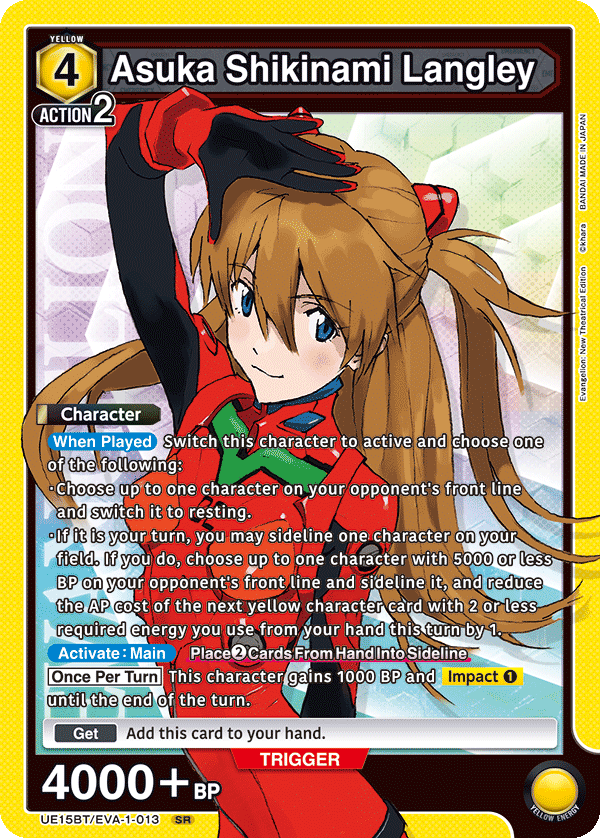
He had two Asuka’s on board, however, and after a series of very impressive manuevers to draw as many cards as possible, he managed to power up both of the two-AP Asuka’s to 5000 BP characters with Impact, swinging in for game.
It was not tough to lose into such a strong player after such a hard fought match, but it was something of a blow to lose my early win streak. It takes mental toughness to not let the loss of a win streak to offset you from continuing to do well in the tournament, however. And I was pretty ready to face down my fifth round.
Round 5 versus GGO
By now you might be catching on to what the meta was largely like at the LCQ. Both Yellow Evangelion and GGO were heavily represented at the tournament, and we’ll get to more in a moment.
This match actually went insanely well for me. My opponent had a very slow start into my fast start, and I got him down to just two life very quickly. However, as I had game on board and began to swing in, a special swung out of life and shut me down. My opponent then cleared my board the next turn. I still had a chance. I used an AP draw and an Argo to try and find my Asuna to close out the game (my opponent only had one life left), but I did not find my Asuna and conceded the match.
Round 6 versus Gaius
Finally in round six I faced the deck that I had planned the most for – Purple Gaius/Spears. This deck is an absolute menace and as such I’ve made sure to study the matchup to a great extent. Still, as hard as it is to bounce back from losing your winning streak, it’s even harder to face the fear that a small slip might be turning into an avalanche.
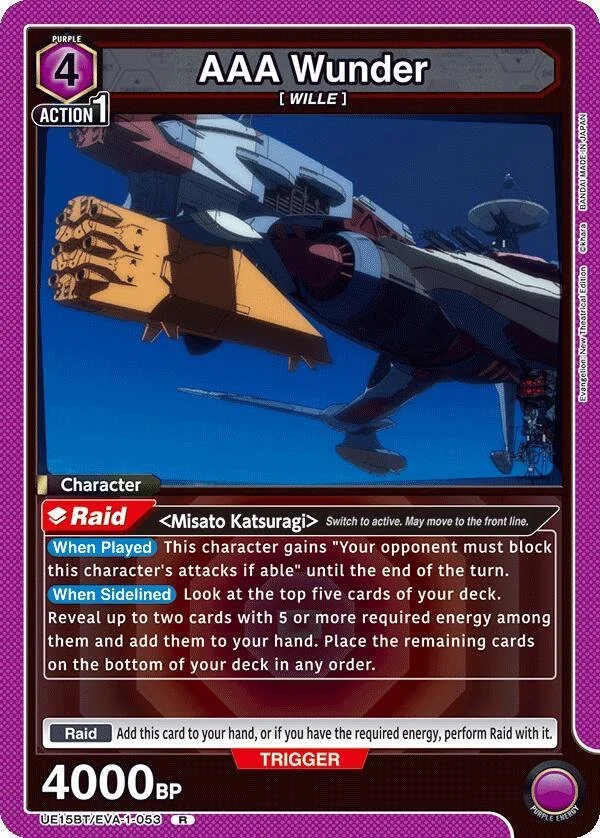
However, my fears were soon alleviated. My opponent started with two AAA Wunder forced block plays – a move I’d seen before. It’s the kind of move that you would think would be strong because it leverages a decent amount of removal. However, it’s often something they (meaning Gaius players) do when they can’t find the full curve.
With this in mind I worked through the forced blocks and kept the pressure on. In the end, I was able to put on far too much pressure via my Asuna/Kirito/Mito combos that the Gaius with the slow ramp just couldn’t contend with.
Round 7 versus Red Kenshin
Winning round six match gave me the boost of mojo I needed to go strong into round 7 versus a Red Kenshin player who had actually been at the same Case Tournament a week prior. My favorite move into this match was pushing up with a 2000 BP Kirito early and then playing a Mito to the front line just to reduce the 3000 BP zero-cost Kenshin down-to-size.
It’s not like that really did a whole lot but it’s kind of a nice thumb in the face of a card that likes to sit there stopping opponents from getting attacks through with ease. I also then had plenty of characters to block with and push back to the energy line.
However, I think my biggest issue into this match was simply not managing my energy line well. I should have pushed up a bit more and I also made one really awkward missplay that enabled my opponent to block me out.
Anyways, my opponent played the game very well and I thought I most certainly had lost it. However, with two life left he hit a Purple Color trigger that saved my butt. I had to block out and sacrifice my entire front line, but then I simply pushed up my Argo to close out the game as his 4000 BP defenders couldn’t block her.
Super close game that I won by the skin of my teeth, but that’s UNION ARENA in a nutshell!
Round 8 versus Blue Sukuna
This battle was allegedly the final round. However there ended up being more undefeated players than the Judge thought so it did not end up being the final round. It’s actually somewhat nice to see someone playing something like Blue Sukuna in an Evangelion dominated playing field. My opponent (who had an exceptional attitude and good sportsmanship) was clearly a bit new to the game. His record was solid, however, showing that despite being newer to his deck or the game, he was still able to pull off some impressive victories.
I took a ton of hits towards the end via Malevelont Shrine powered up to three fingers, getting me all the way down to just one life left. But I knew I had game with an Asuna Raid in hand.
Round 9 versus Purple Gaius/Evangelion 13 Hybrid
I’ve been seeing players hyping up the Evangelion Purple Hybrid but this was my first time actually playing against it. I had a very dominant start going into this battle, however, taking three life quickly. However, my opponent had TWO SPECIALS in life, shutting down my first attack and then killing my Raided Mito. It was a huge momentum killer that ended up making the game a lot closer than it otherwise would have been.
In the end, however, I have to tip my hat to my opponent for an insane final play that saw him cycle through a ton of cards and eventually pressuring a game-winning play that was only stopped by an Active trigger out of my life.
It was a fittingly nail-biting end to an insanely intense tournament.
Thoughts on the UNION ARENA LCQ meta
And there you have it – the full play-by-play of my nine round tournament. It was by far the most competitive and intense UNION ARENA tournament I’ve been to, although I have a feeling Nationals tomorrow is going to be even more competitive. Still, it’s really nice to see the UNION ARENA meta rebound to being such a varied thing.
While the meta looks drastically different than it did before Evangelion came out, there’s still a ton of diversity. Red Kenshin is still popular, GGO is a powerhouse, Yellow Evangelion is very popular, and Purple Gaius remains the 10,000 pound gorilla in the room.
Players who are attached to older decks might feel those decks aging more. We really are starting to feel like in UNION ARENA 2.0, where not necessarily every deck is so competitive, but still a decently wide range of decks are strong. Take Purple Progresssive, for example. I doubt Purple Progressive is on anyone’s top tier decks list, but it faired really well for me, netting me 23rd out of 300 talented players, and a spot in the National Championship.
I’ll say it again and again, but there’s just nothing like mastering the deck that you connect with, and knowing it in-and-out.
Top five decks from the LCQ
Now that I’ve shared my experience from the tournament, take a look at the decks that made up the top five of the event. Even though I was there I’m going to have to rely yet again on LullabyAnto who was getting the info while I was too busy snapping pics and chatting with players.
However, Exburst paints a different picture of what decks made the top four, with three of the top four decks being Purple Gaius. Five out of the top ten decks appear to have been Purple Gaius if what exBurst is saying is true. Meanwhile, we also have two Red Kenshin, two Yellow Evangelion, and one Kenpachi/Toshiro – a deck that just doesn’t want to quit!
For North American Finals, we are likely to see an overwhelming presence of Purple Gaius, with Yellow Evangelion, Red Kenshin, and GGO playing secondary roles. Still, from my perspective the event was a very big variety of decks even if Purple Gaius has a huge representation among the top tables.
Thanks to all of my opponent’s for the fantastic matches, and congratulations to Legit vocals for his well earned win, coming in first place piloting Purple Gaius!