UNION ARENA: Every Demon Slayer Vol. 2 Deck, Ranked
Looking for the strongest UNION ARENA: Demon Slayer Vol. 2 deck to build?
Every single Demon Slayer Vol. 2 English card has been revealed, meaning we know exactly what’s going to be included in the English version of the set. And Demon Slayer fans will rejoice to know that many of the set’s strongest decks get significant improvements in the Vol. 2.
Below, I’ll be ranking each and every Demon Slayer Vol. 2 deck from weakest to strongest.
#8 Hashira
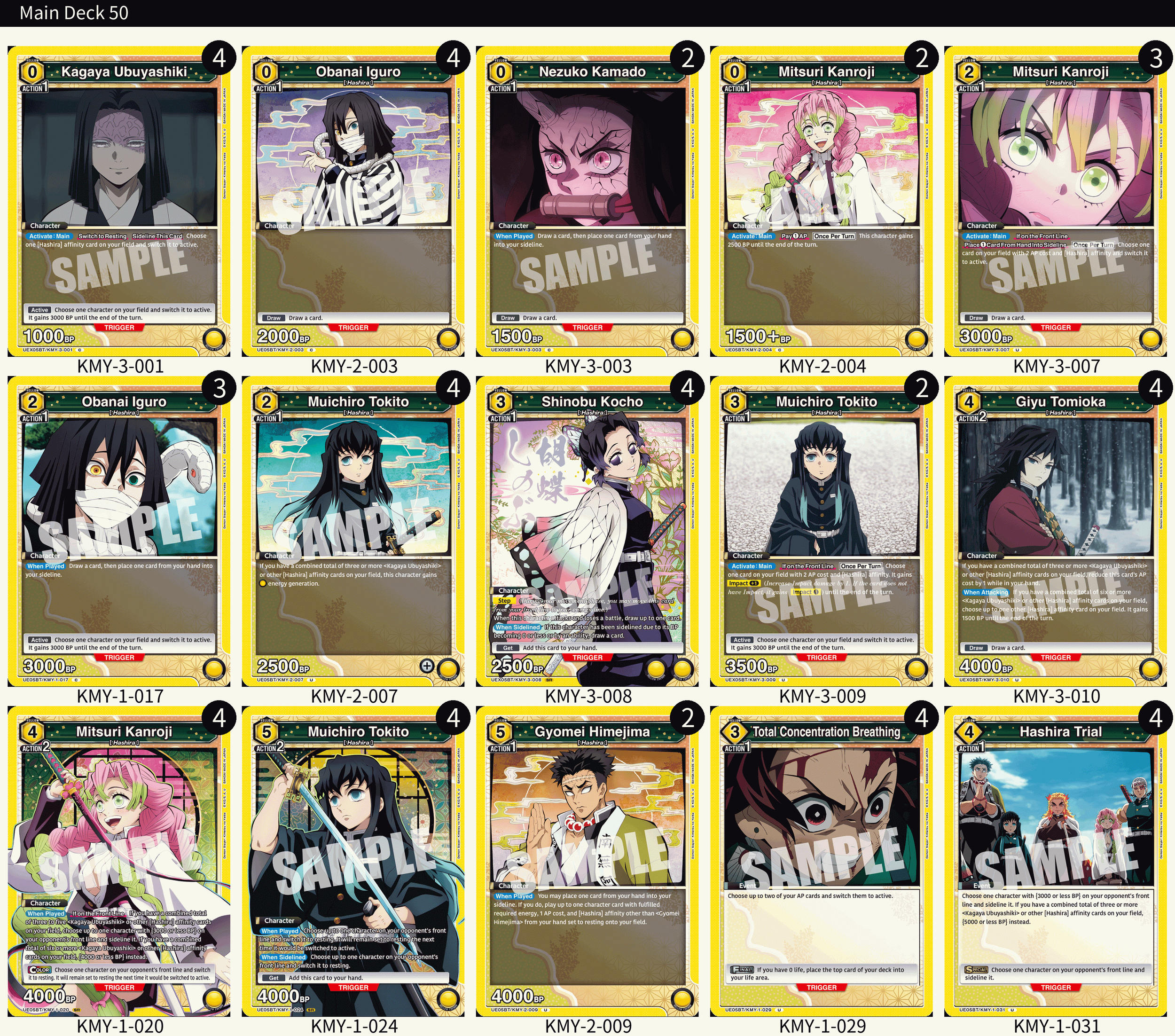
Well, here it is – those Hashira deck upgrades you’ve been waiting so long for. And they are…just okay. While Hashira feels like something of a cult favorite among UNION ARENA players, it has always struggled for relevance outside of the Rare Battle format. The cards released in Vol. 2 however – while helping solve some if its core issues such as characters not coming in active – does little to push the deck into the higher tiers.
While the deck does come with a lot of new and shiny toys to play with, many of them feel like an unnecessary expansion, much in the way the two-AP Kallen/Lelouch combo from Code Geass Vol. 2 actually made the deck worse. Players just ditched the Vol. 2 stuff and ran with good ol’ Purple Code.
That’s not quite the case with Hashira, however. This deck does get a handful of decent cards to help the strategy out, even if many players will likely drop them in favor of a more slimmed down, raidless style of deck.
The most interesting new card is arguably the zero-cost Kagaya.
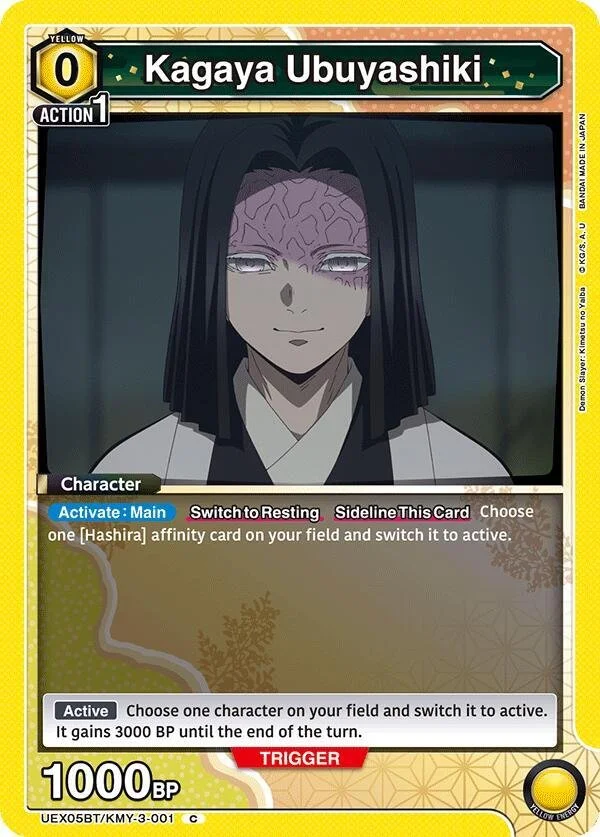
This Kagaya is much, much more helpful than the original Kagaya that we got back in the base set, letting you solve one of this deck’s biggest problem: having almost no characters that come in active. Use Kagaya to switch any of your Hashira to active the turn they are played. While it’s more like masking the core issue with Hashira, it still does help the lack of Raid characters this deck is faced with.
Other interesting cards Hashira gets that are worth noting:
Zero-cost Nezuko could make a decent add to the strategy although her lacking the Hashira affinity will likely reduce the total count in your deck.
The two-energy cost Kanroji solves a similar issue as the Kagaya.
Three-cost Tokito lets you grant Impact to any of your two-AP Hashira.
The new Giyu counts as a two-AP cost character on the field but will almost always be just one-AP in hand, meaning he’s easy to play but can still be targeted with your Kanroji/Tokito effects.
And finally there’s the card that most players will probably take note of – the Shinobu Kocho.
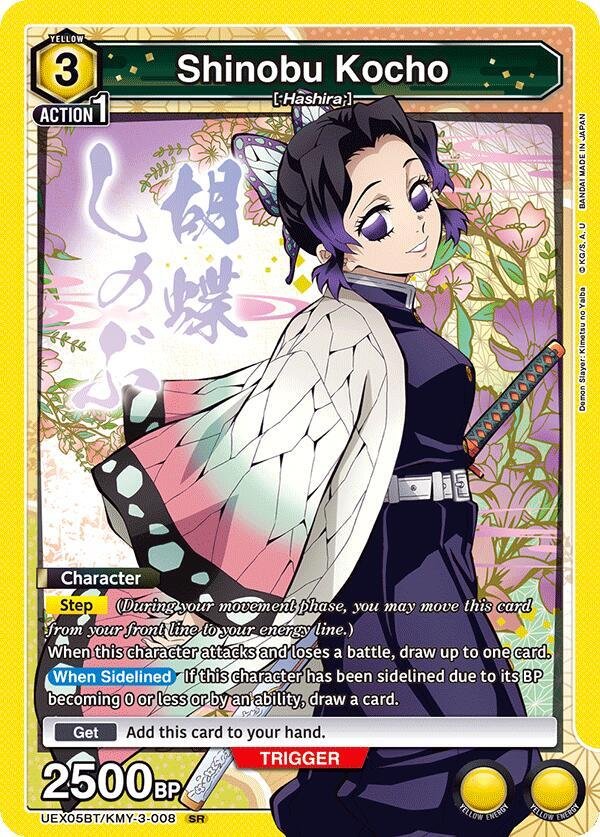
Shinobu may generate two energy when on your energy line, but there are actually a lot of reasons to field her to the front line. For starters, her Step keyword makes her easy to push back when needed. Also, she offers several handy draw effects, letting you draw a card when she is sidelined outside of battle, and also letting you draw when she attacks and is blocked.
Even with all of this incredible new support, however, Hashira still fails to be a top tier deck, and will likely struggle even as a B-tier option. Indeed, it feels like one of those decks that’s destined for the C-tier or lower: strong enough to compete, but primarily a deck you run for the fun of it.
#7 Zenitsu and Friends
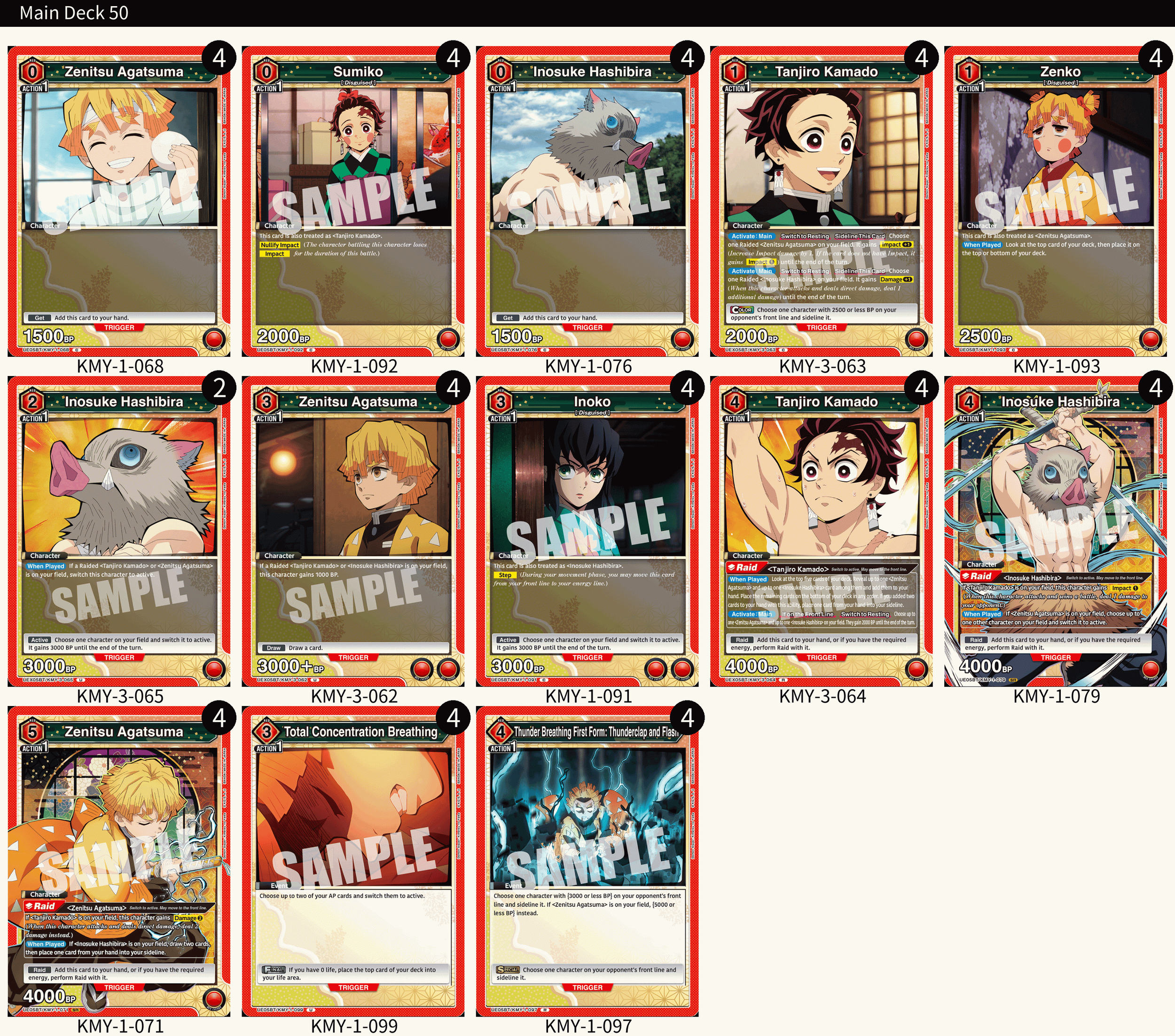
Even following Vol. 2, the Red Zenitsu and friends deck remains the perfect example of why there’s a lot more to UNION ARENA than pure offense. If offensive strategies were all you needed to succeed in this game, then Zenitsu and friends sort of has it all. You can attack indiscriminately with a combo of Damage 2 and Impact, and in the right circumstances that can be enough to win you the game.
However, it lacks the nuances to deal with top threats in the UNION ARENA meta very well, relying on an all out assault that either passes or fails.
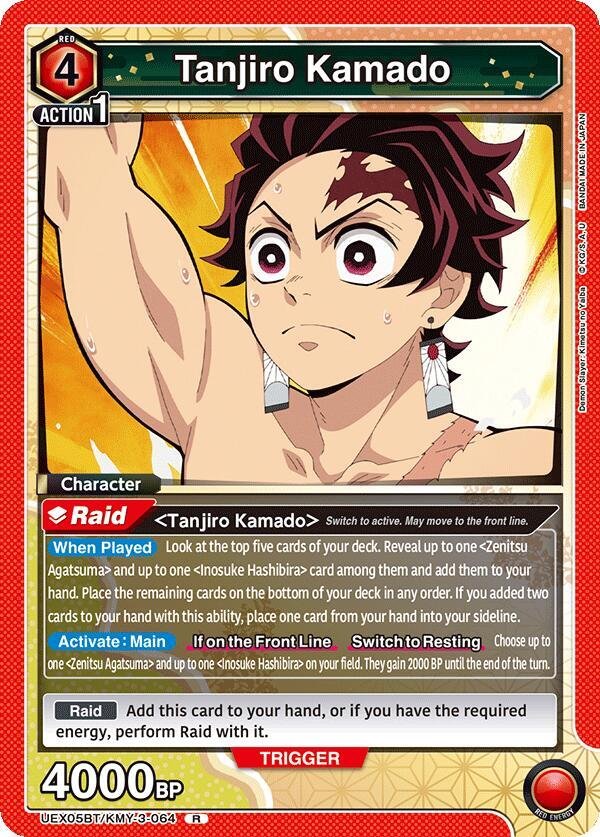
The main add to this deck’s strategy is the Tanjiro Raid. While Tanjiro plays a supporting role in this deck for once, it’s still nice to have an added Tanjiro named card to help unlock your character’s effects that are at full power when all three of “the boys” are on the field.
#6 Tokito/Kanroji
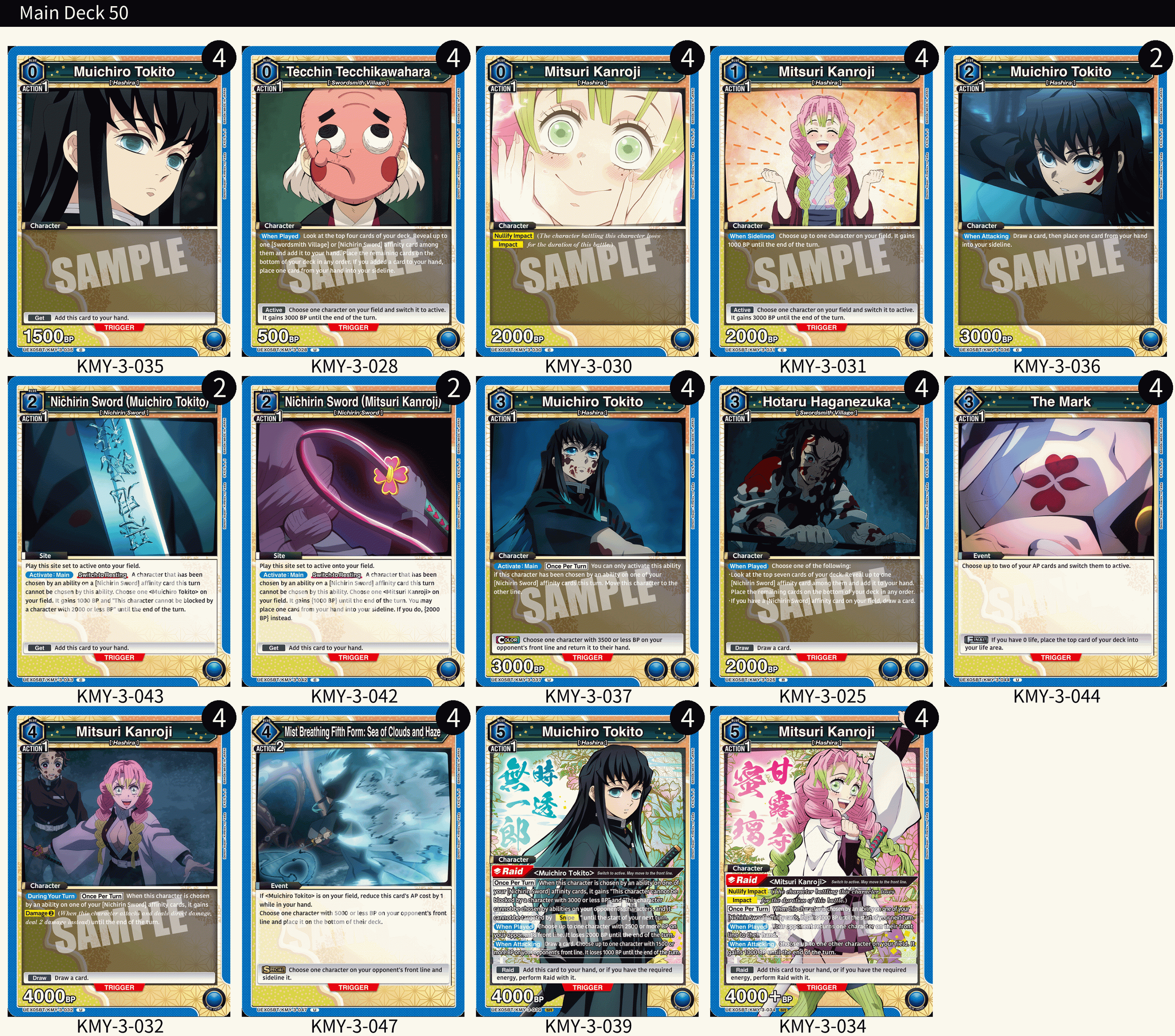
Despite being on the lower end of these power rankings, Tokito/Kanroji still has some very interesting mechanics that are worth exploring. Like all of the Blue Demon Slayer decks, its primary focus is on the Nichirin Sword Site cards and how they target your characters to unlock plenty of effects.
The Tokito strategy is a little strange as it is primarily focused on lowering your opponent’s characters’ BP not to remove them but simply to swing through them. It’s not the greatest strategy we’ve ever seen, but one thing this deck has going for it in a very big way is in the indomitable Raid Tokito.
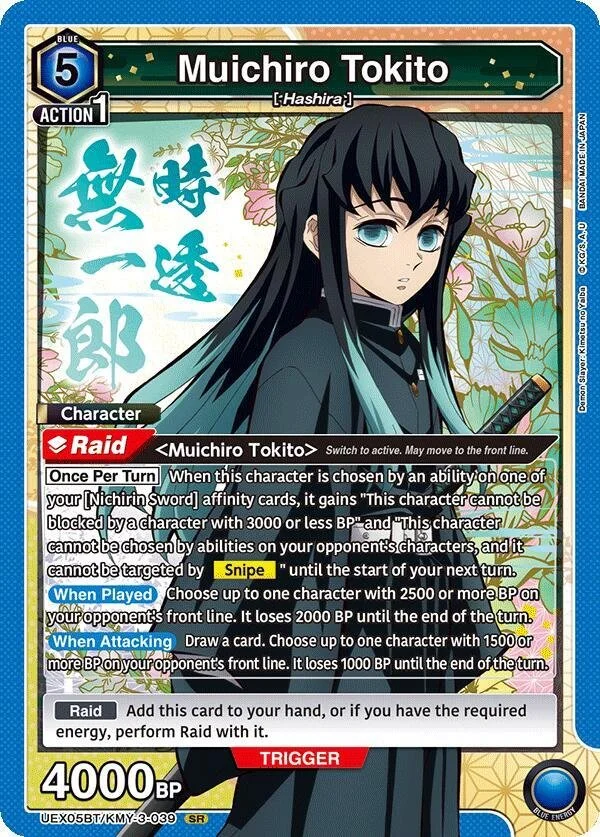
Tokito is the first character we’ve seen in the English version of the game that becomes almost totally impervious to being removed by character abilities as long as it has been targeted by his Nichirin Sword. Not only can he not be chosen by character abilities, he also can’t be Sniped.
The number of things that can actually affect Tokito when in this state are limited to Event cards, or things like forcing you to block (they apply to you not your card) can still be used to take him out. Additionally, he can still be affected by blanket abilities that hit all characters on your field. However, odds are very, very good that once you manage to target him with that sword site card, he’s sticking around.
#5 Gyutaro/Daki
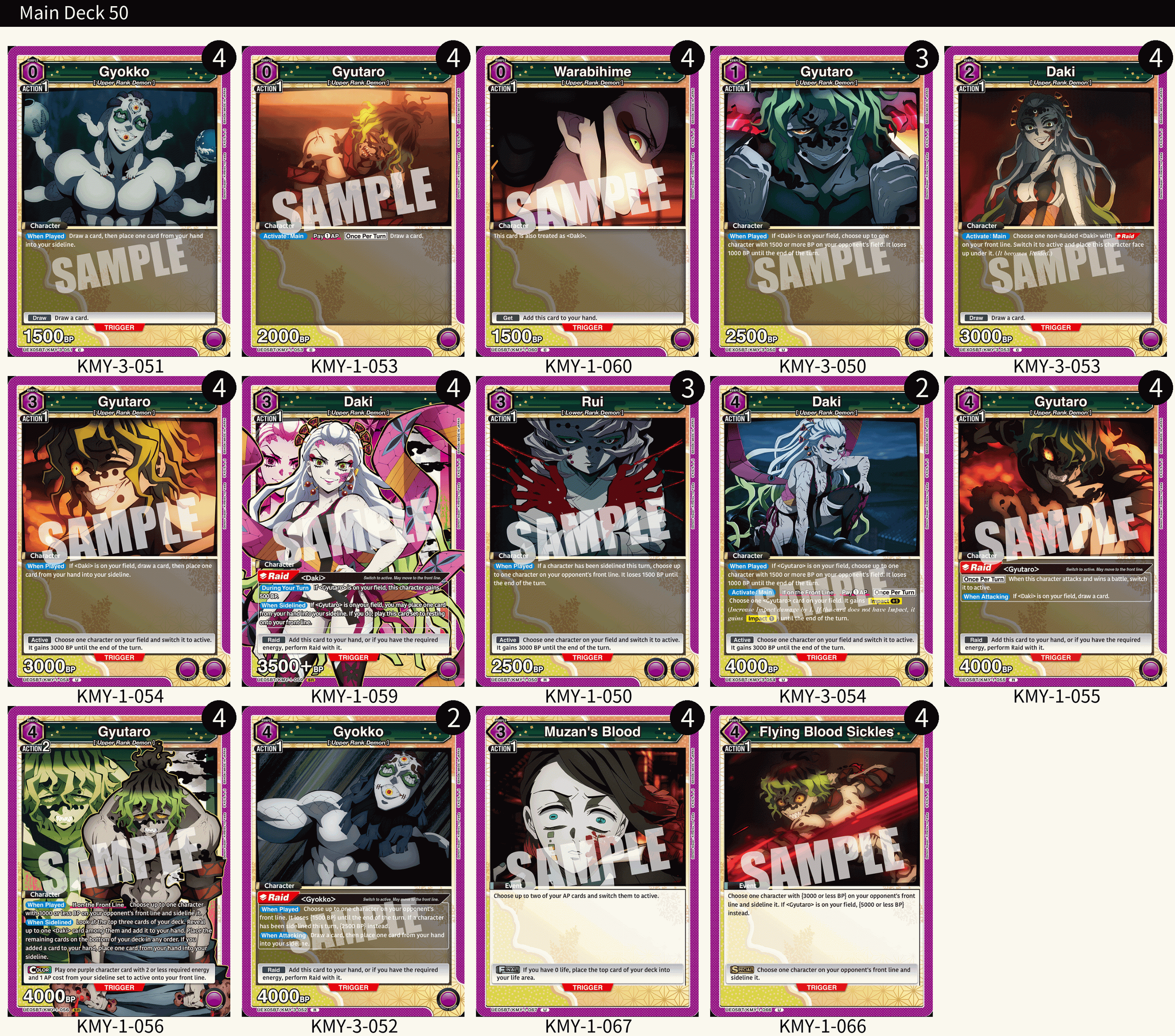
In the Demon Slayer base set, Gyutaro/Daki was my deck of choice. I managed to pilot it to first place at a very competitive tournament (20 players) and it was my go-to deck for the Rare Battle format (at which I topped both).
Accolades aside, sometimes growing up means changing your ways, and I’ve learned so much about UNION ARENA and have gotten so much better at it that I can now see the obvious holes in the Gyutaro/Daki strategy that limit its potential.
Really, there’s just about nothing that this deck does particularly well. It’s not a great removal deck, it’s not a great aggro deck, it’s just sort of okay at several different things. However, with Vol. 2, it gets a lot better. Thanks to some solid BP reduction effects, you can at least sideline decently strong characters with your two-AP Gyutaro, making him feel much, much more effective than he used to.
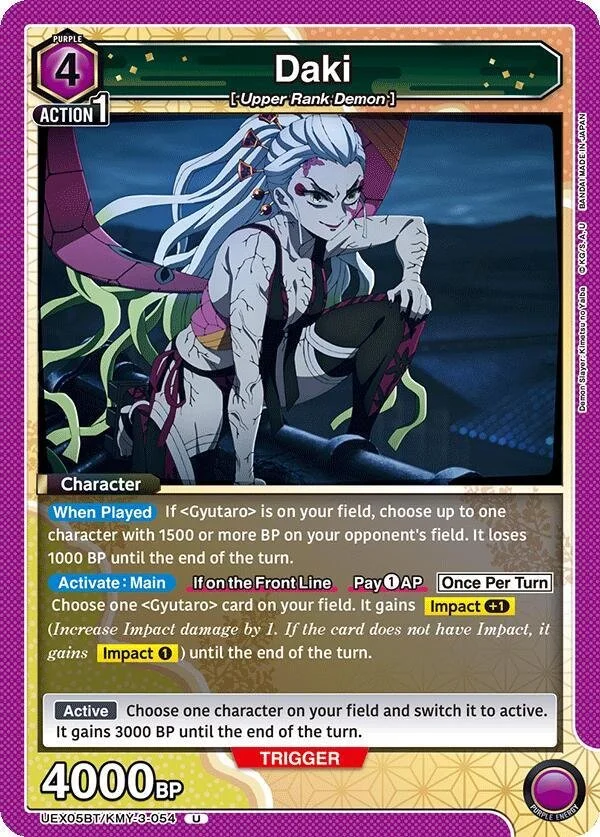
You also do get a new zero-cost draw card thanks to Gyokko, and Gyokko’s Raid seems to work well into this strategy by further reducing the BP of characters and possibly even removing them altogether.
It’s not a top tier deck. It’s not even close. But it will always hold a special place in my heart from those early days of UNION ARENA where I somehow managed to pilot it to the top.
Learn more about the important upgrades coming to the Gyutaro/Daki deck via the guide.
#4 Rengoku
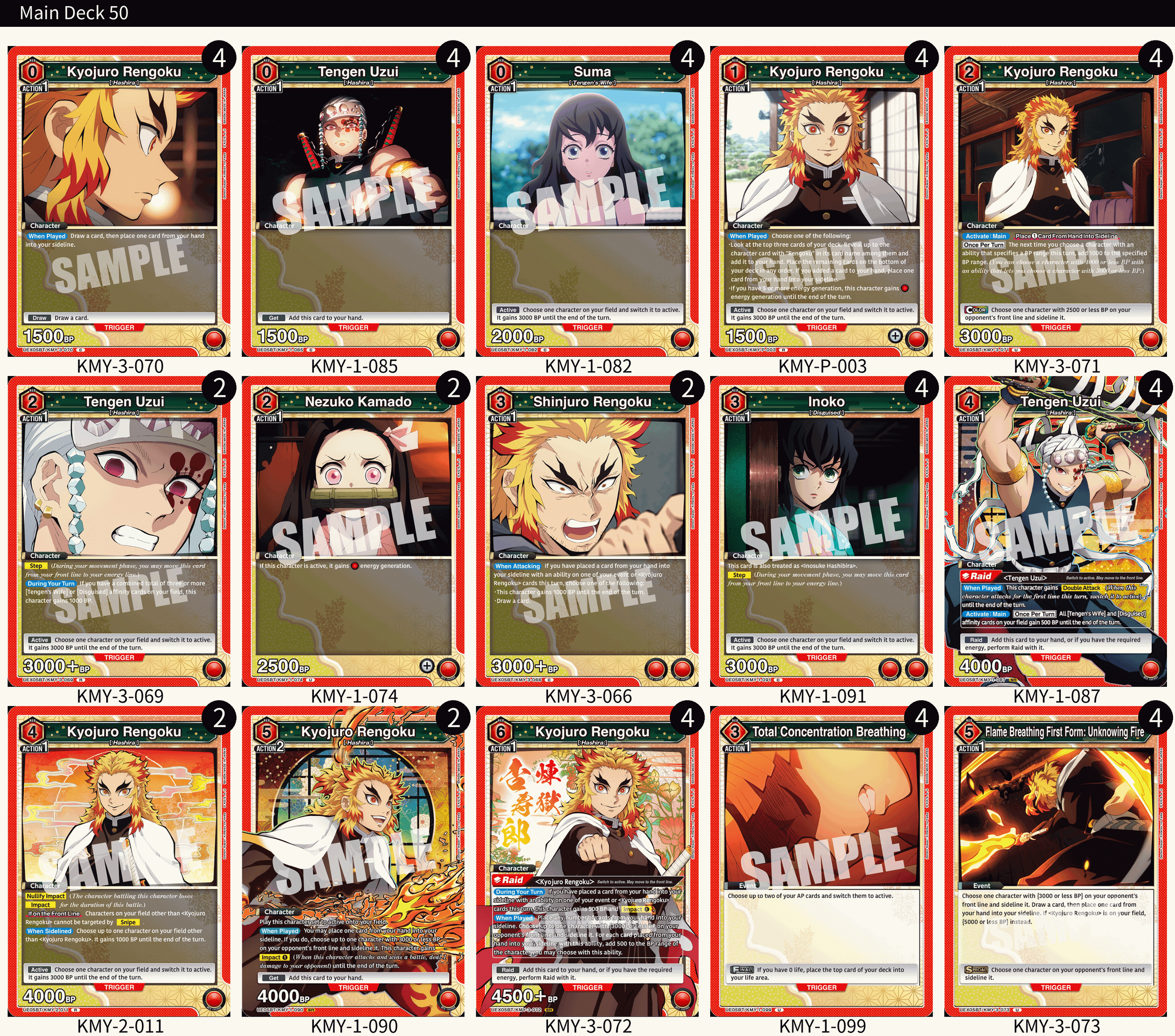
Rengoku is such a popular character you know players are going to want to try and build something around him. And honestly, this deck gives you plenty of reasons to want to try doing so. At the end of the day – and also true to lore – Rengoku is a straight, old-fashioned removal deck, with plenty of tools to do the job effectively.
His only problem might just be a lack of a natural secondary attacker. Indeed, he would benefit from a more support-aimed secondary Raid. In the absence of a natural fit, however, I’m just making do with Tengen and his powerful Double Attack.
Raid Rengoku brings the fire
The main new add in Vol. 2 that makes Rengoku a powerhouse deck in its own right is the new six-cost Raid Rengoku.
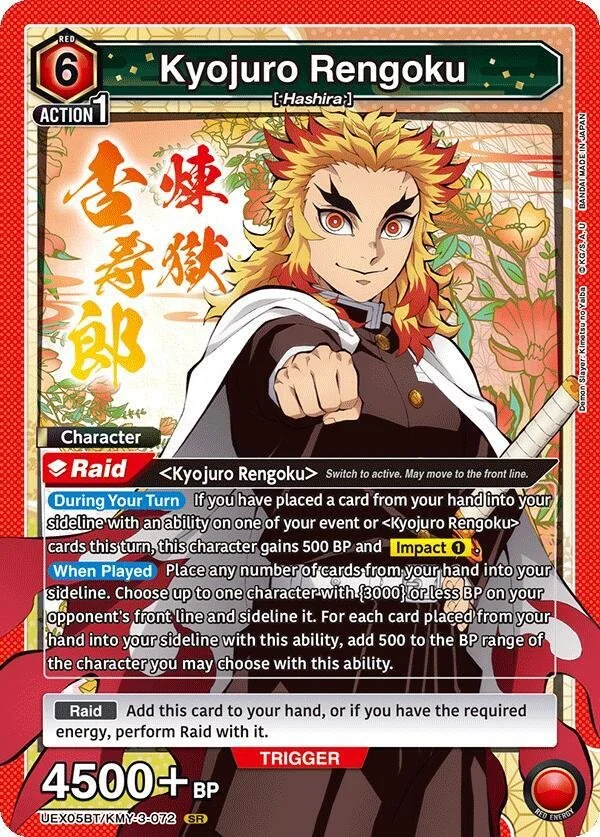
Outside of being a powerful removal character, Rengoku has 4500 BP base which makes him excellent for defending. Meanwhile, he easily buffs to a 5000 BP character with Impact during your turn. His removal effect feels very easy to get off, doing a base 3000 BP sideline plus 500 for each card you discard from hand.
Two-cost Rengoku enhances removal effects
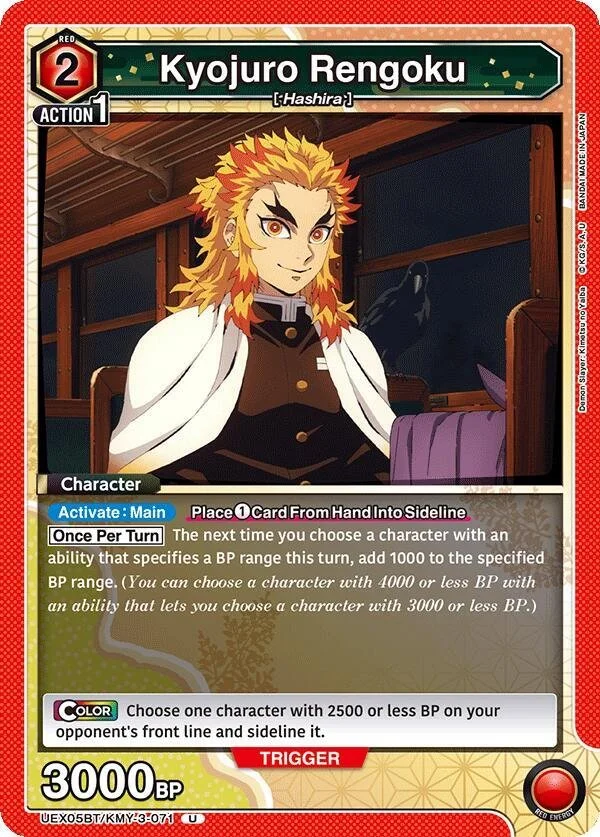

The other card that’s worth highlighting here is the two-cost Rengoku. This deck’s color trigger also lets you easily enhance the range of your key removal effects. While this can be a solid way to get more reach out of your Raid Rengoku, it’s also a powerful solution to enhance the two-AP Rengoku from the base set. Suddenly this character feels a lot stronger, capable of sidelining 4000 BP+ characters.
Rengoku might just be the sleeper deck in Vol. 2. It has such solid removal and key advantages I could really see this one taking off if it finds the right fit with players.
#3 Blue Tanjiro/Kanroji
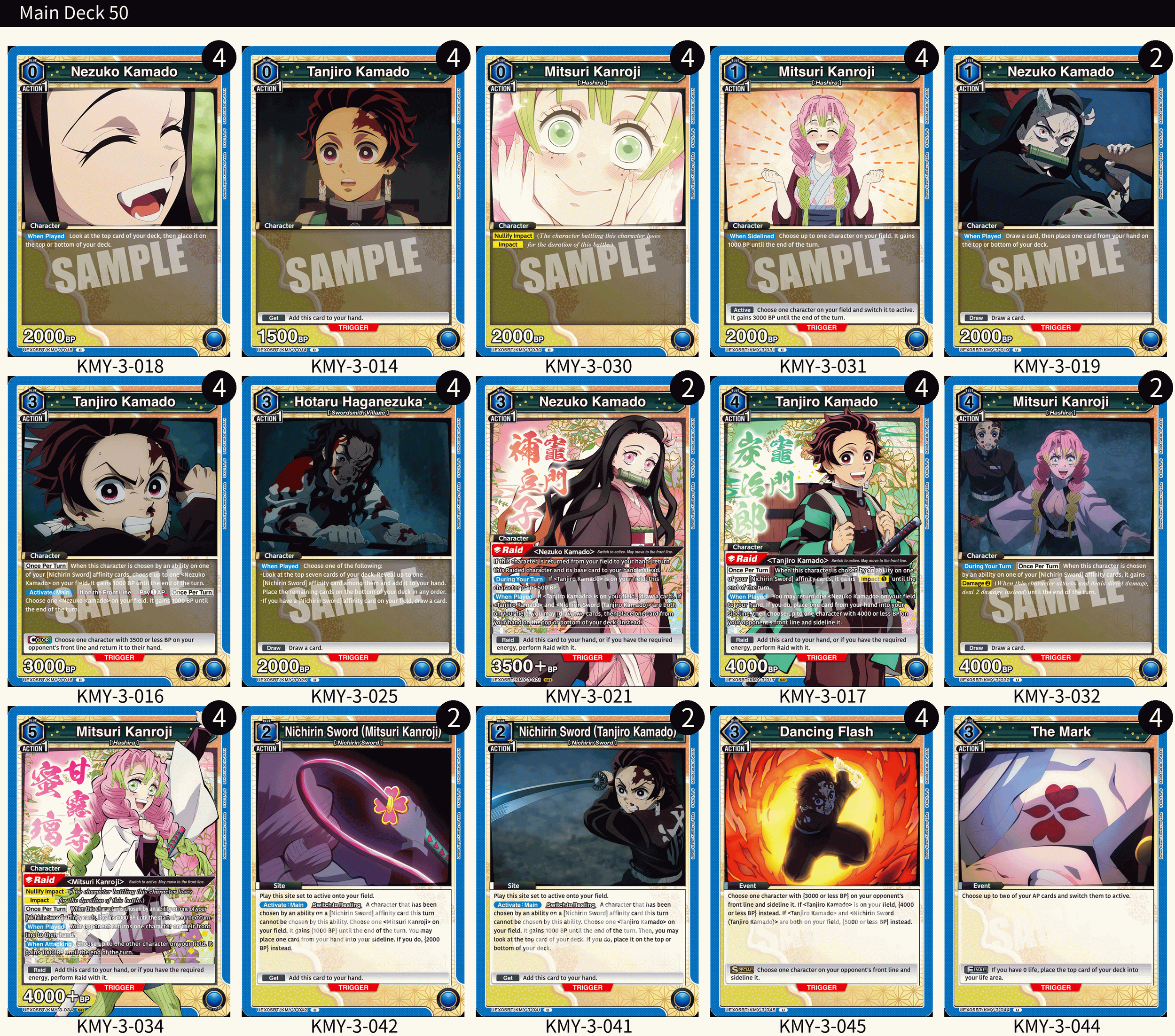
The Demon Slayer Blue energy color introduces a hodgepodge of interesting decks all themed around the Swordsmith Village arc. For players looking for an edgier, more removal-focused Tanjiro/Nezuko deck, this energy color could be the right fit for you!
Here we get to see Nezuko in her demon form, Tanjiro with solid removal, and Kanroji doing a lot of exciting things such as bouncing characters to the hand, defending with 5000 BP, and even attacking with Damage 2.
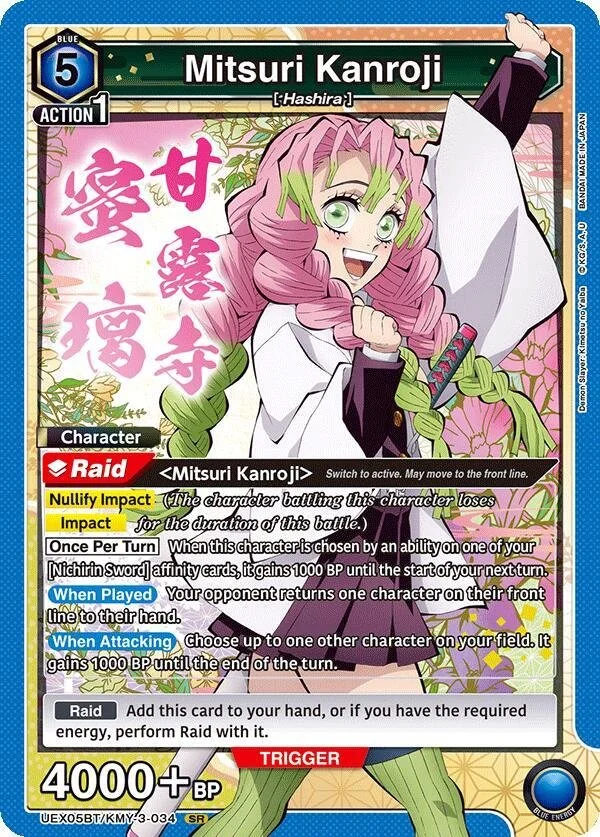
It’s hard to fit all three of these characters into the deck given you have to run the site cards, but a hybrid between Nezuko, Tanjiro, and Kanroji just feels right to unlock the full benefit of what Blue Demon Slayer has to offer.
Check out my guide to this powerful Nichirin Sword strategy via my Tanjiro/Kanroji deck list.
#2 Muzan
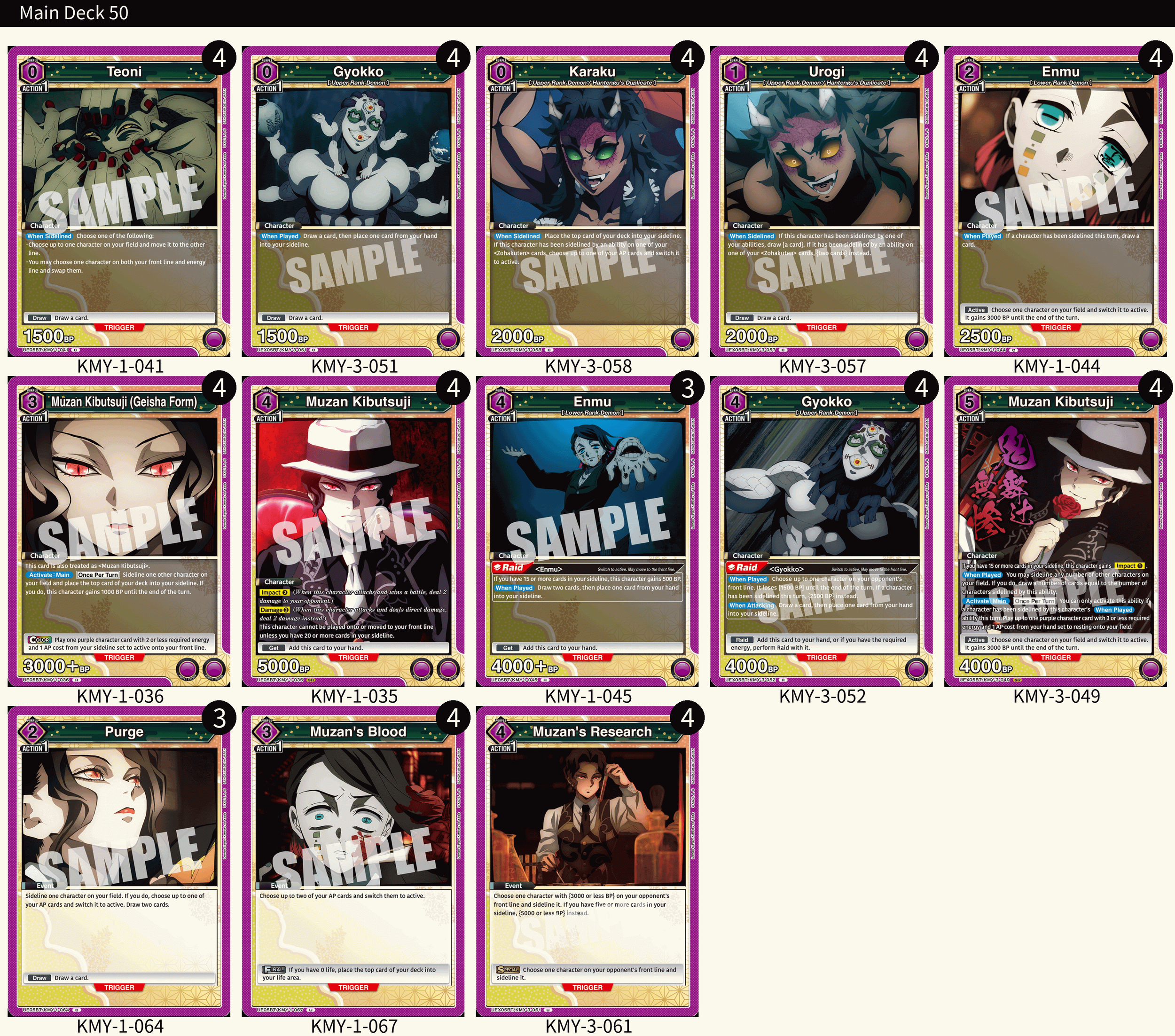
At long last, the Demon King has arrived! Muzan in Demon Slayer’s first set was one of the biggest disappointments of any deck for me in UNION ARENA to date. Honestly, it was thanks to Muzan that I had a lot of trouble seeing late-game strategies like this one that take a lot of build up to pull off as viable in UNION ARENA. Luckily, things have changed since this game’s earliest days and Muzan is totally viable after Vol. 2.
Actually, it’s not just viable – it’s one of the best decks in the set. And the biggest support we get for the strategy is from the new five-cost Muzan.
A new Muzan changes the game
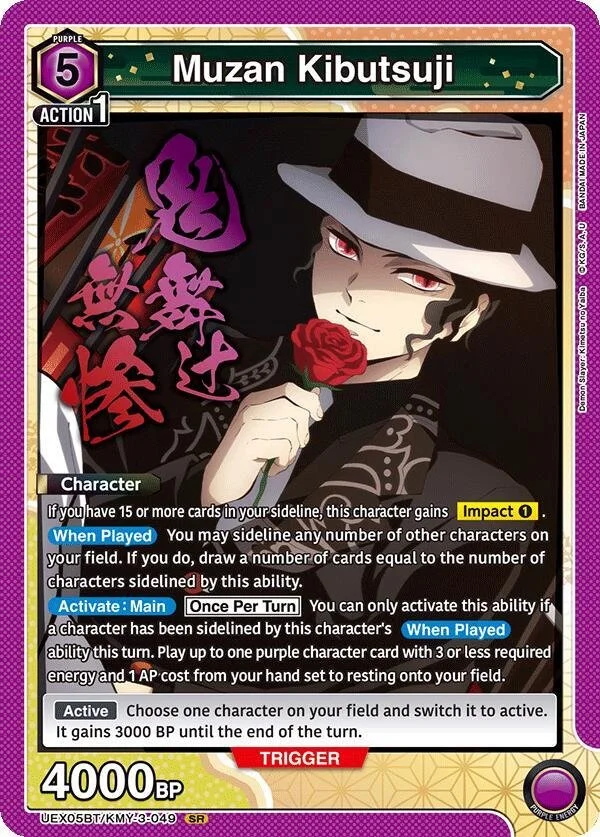
This Muzan card is so insanely strong it’s almost mind-blowing. Play him, and you can sideline as many of your characters as you want, thus stacking your sideline with more fodder to reach that magic 20 number you’ll need to push your end game closer Muzan to the front line. And as if that weren’t good enough, then you get to draw a card for each card sideline this way. And you still get to play a character from our hand for free.
Honestly, what isn’t to love about five-cost Muzan?
However, that’s not all we get in Vol. 2. We also get a plethora of much more suitable characters to be sidelined by Muzan’s “When Played” effect, such as the zero cost Karaku.
Demon Slayer Vol. 2 solves Muzan’s Trigger problem
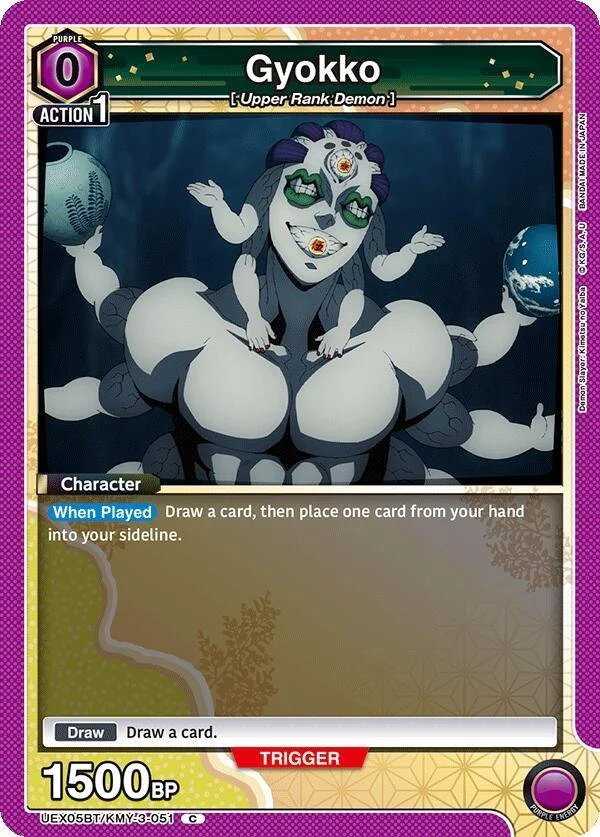
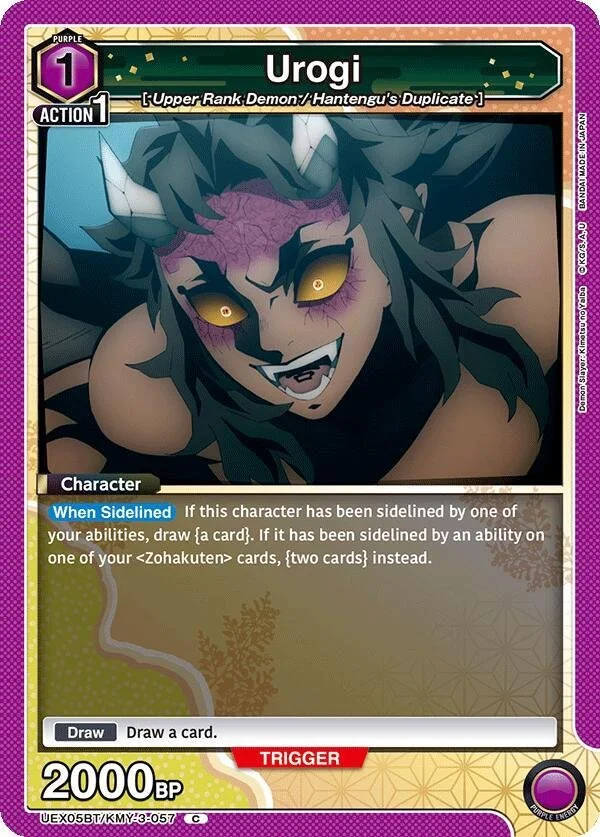
Additionally, we also get a ton of support for this strategy thanks to having way more solid characters to add that actually have triggers. The first set Muzan was painfully lacking in the trigger department, which is typically a no-go in this game (unless you’re running Dorothy).
A powerful new special
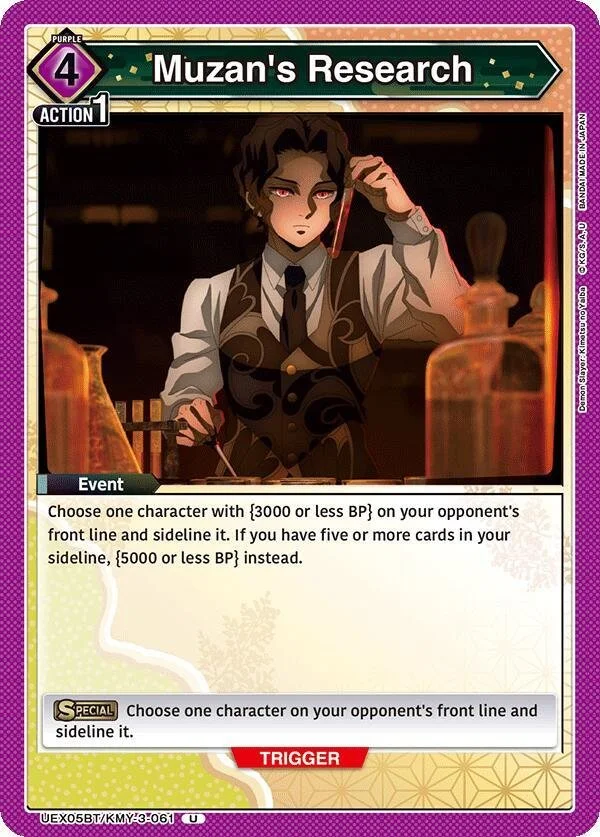
The last card I really want to highlight for Muzan is this one: a new special. This is a big deal as it replaces the need to sideline your own characters to remove opposing ones. While that was nice and all in the first set, now that we have the big five-cost Muzan to kill all your own children it’s nice to just straight up remove characters with 5000 BP or less without even needing a name on the field.
Finally, the Demon King has landed in UNION ARENA and is ready to dish out some punishment.
#1 Yellow Tanjiro/Nezuko is the best Demon Slayer deck
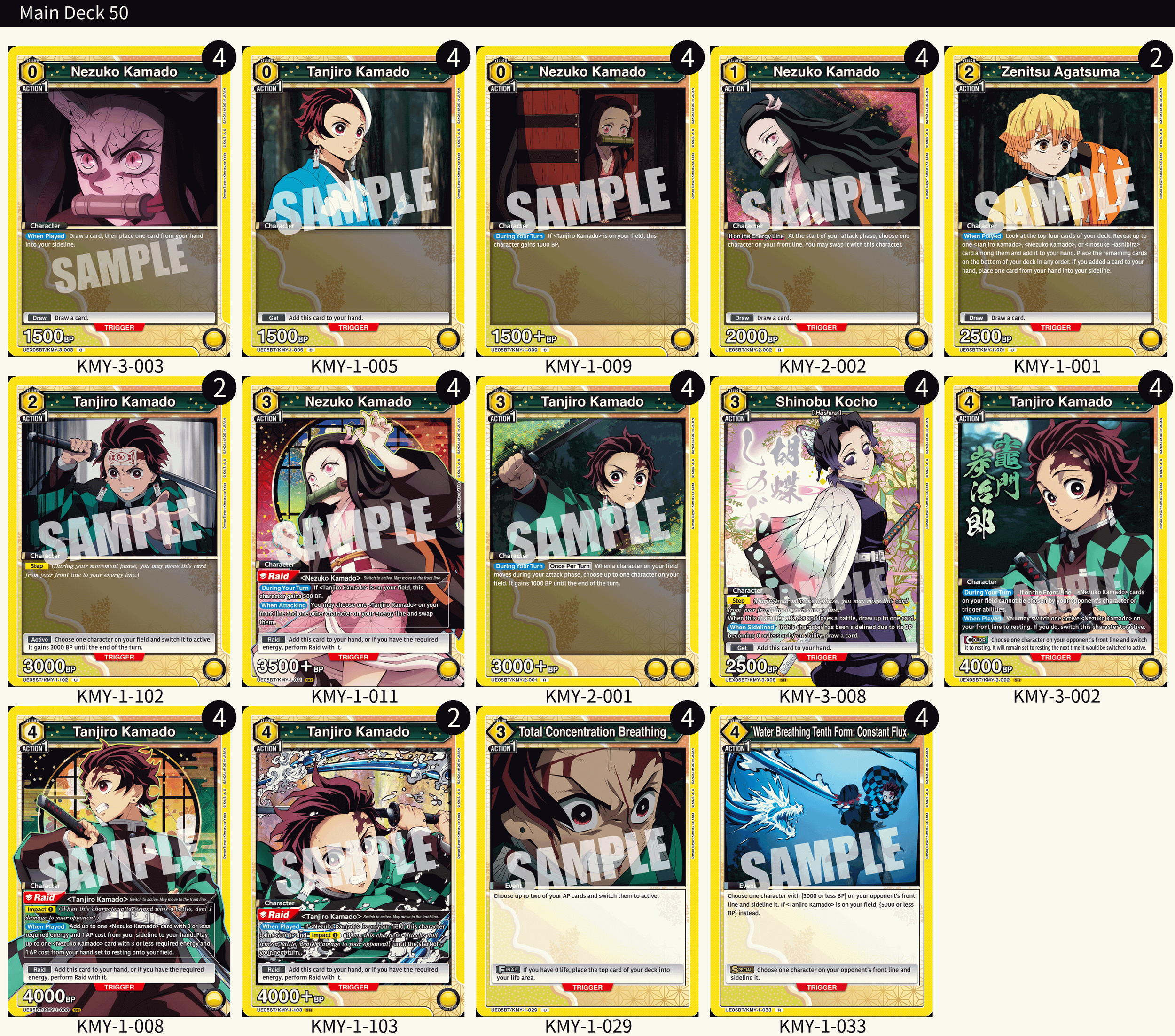
The Demon King isn’t the only thing making a big comeback in Demon Slayer Vol. 2. The old king of the multi-attack strategy, Yellow Tanjiro himself is also making a big return to the metagame with Vol. 2. Indeed, this deck edges out even the phenomenally strong Muzan for top Demon Slayer deck, and we shoudl also see him ranking highly in the meta until Evangelion and Sword Art online release late January.
While previously a strong deck, Tanjiro/Nezuko gets three key new cards that are going to massively enhance its competitive viability. Of the three, the strongest is the new Tanjiro color trigger.
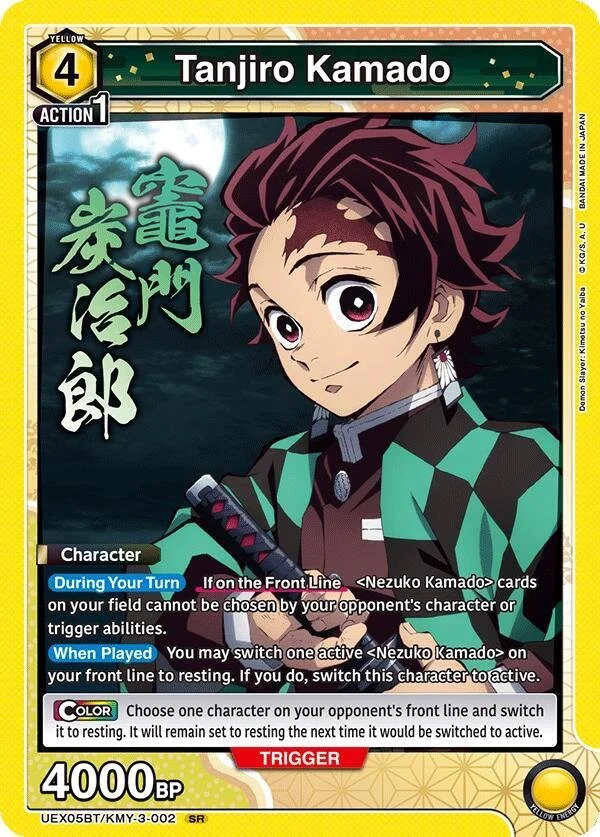
Apart from being a 4000 BP character that can switch to active the turn he is played (always nice to have), Tanjiro covers one of this deck’s biggest weaknesses: an over-reliance on the Nezuko Raid. By protecting your Nezuko characters from being “chosen” by abilities during your turn, she gains much greater stickiness, as does your multi-attack strategy that this deck really needs in order to thrive.
The zero-cost Nezuko that lets you draw-one-sideline-one is nice to have (every top tier deck has a card like it) and so is the three-cost Shinobu for draw support, but it’s the new four-cost Tanjiro that really helps catapult Tanjiro not only to the top of this list, but to the very top of the UNION ARENA metagame, as well.
Learn more about how to play this deck in my Yellow Tanjiro/Nezuko Vol. 2 deck guide.
UNION ARENA: Demon Slayer’s Vol. 2 is a fitting expansion to the strategies found in the original set, and it’s nice to see these decks really come into their own with the added support. For even more info on these new decks and strategies, check out my full set overview on YouTube!