Answering Your UNION ARENA Questions
In this article I’m doing something special for the first time on the blog: answering questions directly from readers of JosephWriterAnderson.com as well as from listeners of the popular Joseph Writer Anderson Podcast.
After sending out a call for questions about anything to be included in a podcast segement, I was blown away by both the number of questions received as well as by their quality. UNION ARENA TCG players truly are a remarkable group of people, and their questions reflect their curiosity. Due to the high number of questions received, I decided to do something special that I really haven’t done before: a direct Q/A with me: the founder of JosephWriterAnderson.com about all things UNION ARENA!
While this Q/A will start as a blog article, a follow-up podcast episode is coming soon as well. So stay tuned for that!
Question from Edgar – What is your thought process/strategy during a UNION ARENA game that leads to more victories?
Answer: There are so many things that impact a positive outcome in UNION ARENA. I often trace my mind back through what happened in a game and try to identify key moments and decisions that could have impacted the outcome. While there is plenty of luck in UNION ARENA – just attend a local tournament anywhere and you’ll probably hear complaints of triggers out of life at least a hundred times – ultimately it’s optimizing our choices that best predict success.
So how do you make better choices? It’s easier said than done, and it’s about a whole lot more than removing cards characters or landing a good mulligan. Indeed, despite how straightforward UNION ARENA is, I often find myself reaching new plateaus, and recognizing new strategies and sequences to improve on.
With all of that being said, where I’m at in the game right now from a skill level – and thanks largely to the influx of new lower energy draw/search cards – the area that I try to optimize for the most is simply how I build my hand.
Things like having a game plan for what Raid you are trying to find most early on can hugely impact your odds of success. Making the right choice on what card to keep and what to discard can have huge implications down the road, so practicing your decision making and how you build your hand from the start to best set yourself up for victory is probably the most challenging and most rewarding area of the TCG at the moment.
Martin asks: What goes into a good Union Arena deck? How do you find the perfect balance between cards?
Answer: I’ve written a bit about how to build a strong UNION ARENA deck in the past, but over time my view on this has evolved. The thing I’ve been the most surprised about in UNION ARENA as we’ve had more advanced sets come out in the English version as well as Vol. 2s is just how much low energy cost characters impact the strength of a deck.
Strong, low-end consistency cards can cover a magnitude of sins in a deck. Likewise, not having them can make even the deck with the strongest Raid characters feel lackluster. I think a great and recent example of just how important low cost draw/filter/search characters are is the phenomenally powerful Kenpachi/Toshiro deck.
In the past, Kenpachi/Toshiro was a deck that had insanely strong Raid characters, yet almost no low-end draw characters. However, when the BLEACH New Card Selection came out, what did Green BLEACH get? A plethora of these cards.
We already had the draw-one-sideline zero-cost Ikkaku, but suddenly we also had a strong zero-cost Shinji that lets you filter, a two-cost Shunsui that lets you search for a character, and the much stronger Toshiro color trigger card that draws a card on play while also acting as a potential raid target and two energy-gen character for arguably one of the strongest Raid characters in the game.
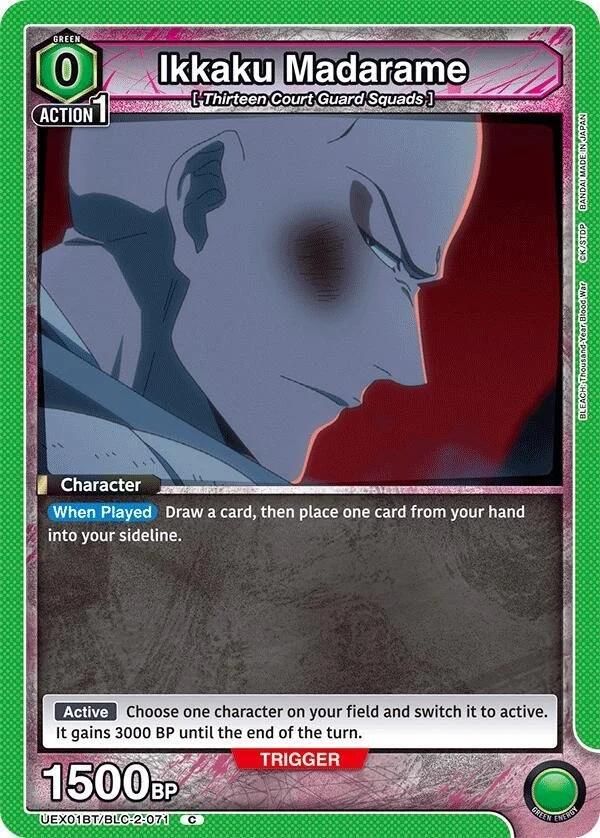
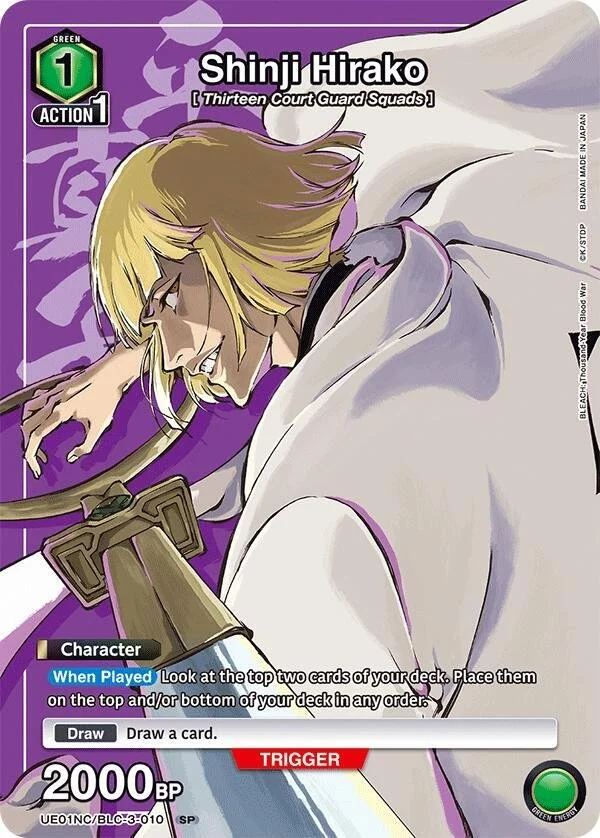
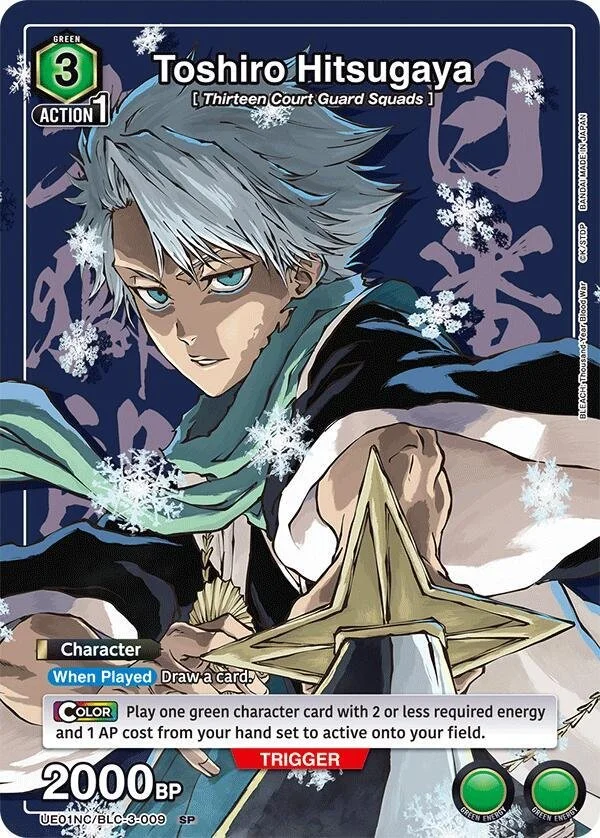
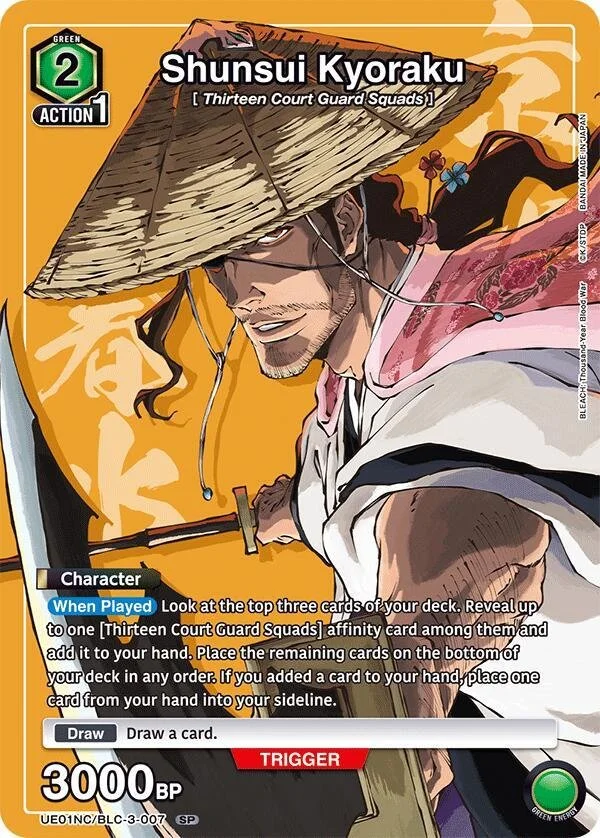
While most decks don’t get this kind of incredible support added all at once (at least not yet), having access to a retinue of consistency cards like this on top of of a solid line of Raid targets and powerful Raids are really what make a deck stand out.
AirBreather 5000 asks: are there any sets where it makes more sense to buy boxes over singles?
Answer: This question was originally posted in my discord and caused quite the stir and lively conversation. Really, it’s a question that could be asked of any TCG, although UNION ARENA does have its own particularities. Yet the answer isn’t as straightforward as you might think, and there are situations where it makes more sense to buy singles, and situations where it makes more sense to buy booster boxes/products.
For starters, as a general rule in TCGs, buying singles is almost always the cheaper route from a purely monetary standpoint. Many UNION ARENA decks can be purchased at very low costs – around $50 for decent deck for example. Buying a single box will often run you more than that, and even with 16 packs to a box you are aren’t going to get a complete deck from a single box.
So if time spent waiting for cards to arrive isn’t an issue, nor having a ton of flexibility around how you build your deck, and you don’t mind searching out every single card online via my friends at TCGPlayer, then chances are buying singles is right for you.
However, one thing that I too often see overlooked in the TCG community in general is a proper awareness of opportunity cost. While on surface value waiting until a set has been online for a few weeks or months when singles are at their cheapest and readily available might be the ultimate cost savings hack, what did the opportunity of not having those cards cost you?
It’s the opportunity cost of not having cards when they first come out that often drives me to purchase products – and sometimes a lot of products. For example, I have a whole case reserved for Sword Art Online Vol. 2 because I know I’m going to build every single deck in that set, collect the alts, and want to play them ASAP while selling the extras to reduce costs.
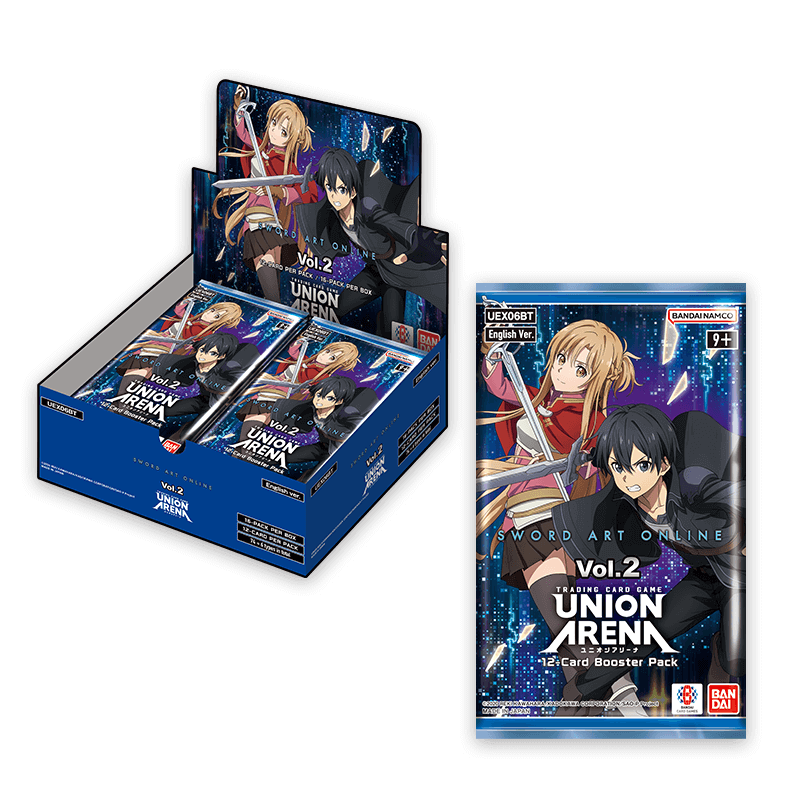
Buying a case at a reasonable price actually provides me better value when time and resell potential is factored in. So really it just depends on where you are at and what your priorities are.
If you are a competitive player and need that new top tier deck ASAP, or you really want to go deep on a set and explore different card combinations and strategies, buying products might be the right fit for you. However, if you’re a more casual player or if really only one or two decks from a set interest you, you’re often safer picking up the singles instead.
Chuck asks: When do you want to go second in UA?
Answer: I’ll start by saying I don’t think there’s a definitive right or wrong choice when it comes to going first or second in UNION ARENA. I know many strong players with equally strong preferences about going first or going second. It also is something that may vary from deck to deck.
With that being said, I almost always prefer to go first, no matter the deck. Sure, going first means risking your opponent outplaying you on the second turn by being able to get more aggressive, or by finding an AP Extend that they can use early to get set up more quickly. It can also be a more conservative choice that allows you to draw your way out of a bad mulligen with more ease.
With all of that being said, I find going first to be the safer and more consistent option. Going first has the highest probability of being the right choice to me. When going first you are:
More likely to get the first attack in.
More likely to hit your strongest turn first (typically turn three).
The second one is arguably the bigger reason to go first for me. After testing between first and second, I found that I was more likely to hit “the big turn” – AP extends, Raids, etc. – before my opponent when going first, and sometimes that can make all the difference.
Sauceboss asks: What's your favorite deck that you know underperforms? What deck do you think is one card or so away from being very competitive and what would the card be?
Answer: I’m going to go with my knee jerk response to this question cause sometimes that’s just the best way to do it, and that is easily the Code Geass Pizza deck. Code Geass Pizza is one of the most fun decks to play, and it has some very solid high end power. However, it’s missing one-too-many pieces of what a top tier deck should have to really make it stand out competitively.
To answer the second part of the question, if Pizza had a solid one-cost character that really fit the strategy, or if the three-cost Lelouch had two energy-gen instead of just one, the deck would be considerably easier to make work. As is, it’s sort of a pain to build around all of those Pizza cards that largely take up dead space.
Artyspagharty asks: Is Mina still your favorite deck and would you feel about it going forward with the coming SAO and Evangelion format?
Answer: Right now is a great time in the UNION ARENA meta, and I don’t really see that changing even with how powerful Evangelion is likely to be. Just for context because it is a very hyped UNION ARENA set – Evangelion is already slipping slightly in Japan. Whereas it felt like every deck was S-tier when the set originally launched, now fewer Evangelion decks are topping events and the Japanese meta is becoming more balanced.
However, it’s likely that we will be getting more than one card cut from the English set (some are even saying this is basically confirmed via card list numbers), making Evangelion much less of an overwhelming threat than many fear it will be.
With that context provided, I’ll say that Yellow Mina is my preferred deck at the moment. Its ability to be both a powerful aggro deck early in the game and also a solid control deck towards the mid-to-late game feels unmatched right now in the UNION ARENA meta. And while Mina will remain a favorite of mine for some time, it’s unlikely to remain in the S-tier post Evangelion/Sword Art Online Vol. 2. While it will still be a powerful deck and deadly in the hands of those who know how to play it, it will slip down to A-tier status (tiers 1.5-2) as Evangelion and SAO take center stage.
Sam asks: How much playtesting do you recommend till you would start modifying/tweaking on a deck?
Answer: Playtesting in UNION ARENA is the fastest road to having more success. I playtest all the time both on my own as well as with friends. In terms of how long you should wait before making any changes? That really just depends on the change, but assuming your general ratios are correct and you aren’t testing something really off-the-wall (in which case you might know very quickly if it works as a concept or not), I would suggest playing one or two best of three matches to account for RNG before making significant changes. After playing two full best of three matches, you’ll have a stronger feel for how the deck operates.
That being said, I find the best way to test a deck and/or concept is to take it out into the field and compete in a tournament. Usually things that I didn’t notice when playing solo with the stakes low become apparent when I play at a competitive tournament.
Thanks again to everyone who submitted a question and stay tuned for the upcoming podcast featuring these and even more questions from readers and listeners like you!
Merry Christmas!